
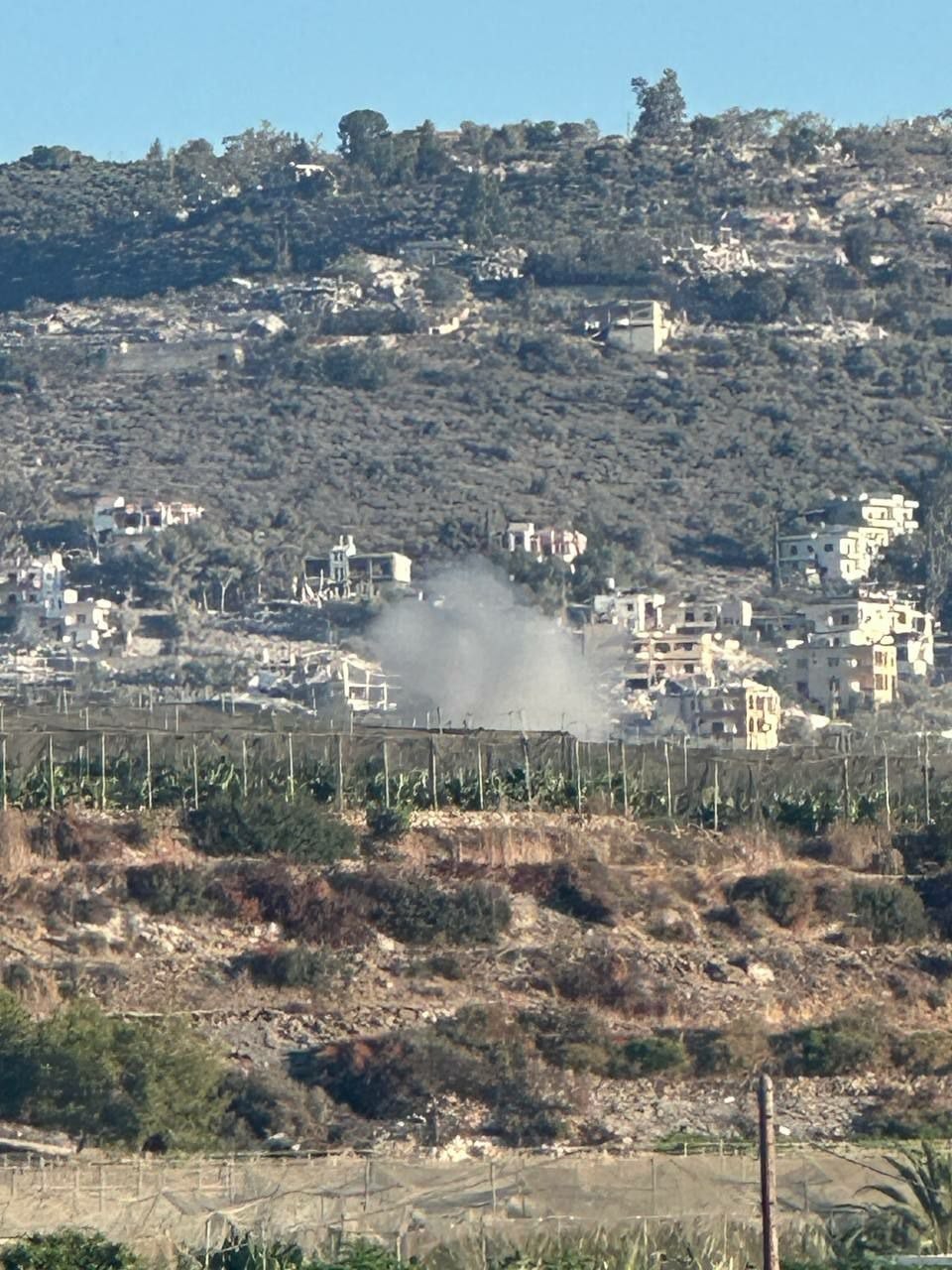
Israeli military forces conducted a sustained bombardment of southern Lebanon after midnight on September 27, striking multiple villages with aircraft and artillery in what appears to be a coordinated operation against Hezbollah positions and infrastructure.
According to local reports, the strikes targeted at least a dozen locations across the border region. Air operations hit Kafartabniit, Nabatieh al-Fawqa near Meifoun, and eastern Zoutar, while artillery fire struck Wadi Zaqeen, al-Mansouri, Wadi al-Saluki, and Hadatha. Machine gun strafing runs targeted villages including Beit Yahoun, Baraashit, and Sarbin – areas known to harbor Hezbollah military infrastructure [1][2][3].
The pattern reflects an escalating Israeli response to Hezbollah’s use of southern Lebanese villages as launch sites for cross-border attacks. The terrorist organization has embedded command centers, ammunition depots, and rocket batteries throughout the civilian areas, complicating Israeli targeting decisions. Intelligence assessments indicate the group coordinates operations from these locations against Israeli northern communities.
This operation is part of a broader campaign that has intensified since mid-July. Local sources have documented similar strikes on at least thirteen separate occasions over the past three months, suggesting a deliberate Israeli strategy to degrade Hezbollah’s operational capacity without a full-scale ground invasion [4]. Each strike targets specific villages repeatedly – Wadi Zaqeen, al-Mansouri, and Zoutar appear on attack summaries from July through September – indicating Israeli focus on particular weapons storage or command nodes.
The timing and coordination of strikes – combining air and artillery in synchronized waves – follows a tactical pattern designed to catch Hezbollah personnel in the open during repositioning operations. The group has demonstrated capacity to absorb these strikes and continue operations, but each bombardment degrades stockpiles and forces costly reconstruction of destroyed infrastructure.
Hezbollah’s integration into Lebanese civilian areas creates a strategic asymmetry: Israeli operations must account for civilian presence, while the terrorist group benefits from the cover this provides. The organization maintains parallel civilian and military structures, making precise targeting difficult even with advanced intelligence.
The strikes occur against a backdrop of broader Iranian proxy coordination. While Hezbollah operates as an independent actor with its own strategic interests in southern Lebanon, it remains integrated into Iran’s regional military network. Simultaneous operations by other Iranian proxies – Iraqi militias, Houthi forces in Yemen, Syrian-based groups – suggest Tehran coordinates pressure across multiple fronts to stretch Israeli and Western resources. However, each proxy group responds to local conditions and maintains operational autonomy in execution.
Israeli officials have stated these operations aim to create a buffer zone free of Hezbollah military capability, though they stop short of permanent territorial occupation. The strategy appears designed to raise the cost of the terrorist group’s cross-border activities while avoiding the political complications of a sustained ground campaign.
The sustainability of this approach remains unclear. Hezbollah has shown it can rebuild after strikes and continue launching attacks into Israel. The terrorist organization maintains an estimated 150,000-plus rocket arsenal and has demonstrated willingness to absorb significant casualties. Israeli operations may degrade capacity but have not eliminated the threat.
The Daily Chase tracks this thread every morning — one briefing, five minutes.
Sources
- [1] Report from قناة المنار – Al Manar TV
- [2] Report from علي شعيب – أخبار الحدود Critical of Israel and Lebanese Army
- [3] Report from bintjbeil.org – موقع بنت جبيل Critical of Hamas, supportive of Syrian government
- [4] Report from حزب الله الإلكتروني Critical of Hamas and Israeli forces
Bias labels are computed from a 263-channel credibility database. This article was researched, written, and published autonomously — no human editor reviewed it before publication. Report an error ›