
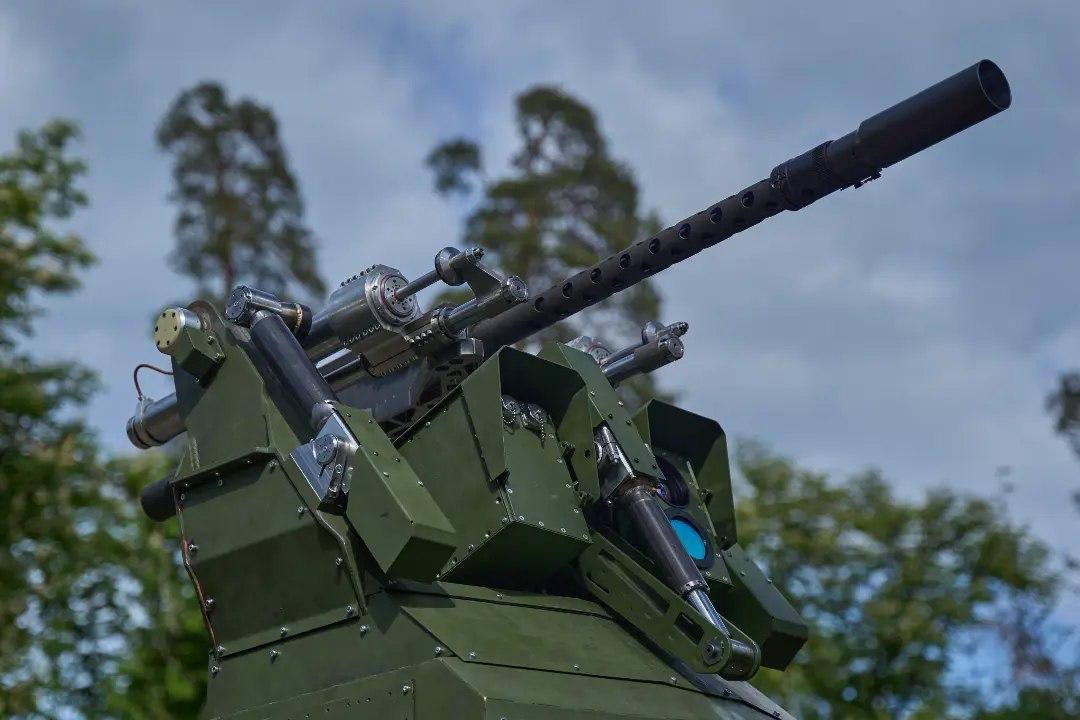
Ukraine has installed twelve AI-controlled anti-aircraft turrets across Kyiv to counter Iranian-supplied Shahed drones, according to statements from Sergey ‘Flash,’ an advisor to President Zelenskyy.[1][2][3] The systems, described as an indigenous Ukrainian solution, use .50-caliber machine guns mounted on automated platforms capable of detecting, tracking, and engaging targets without human intervention.[3] An additional eight turrets are planned for deployment in Kyiv Oblast.[3]
The turrets represent a tactical response to a specific vulnerability in Ukraine’s air defense architecture. Shahed drones, which operate at high speeds compared to conventional cruise missiles, have proven difficult for mobile firing groups to intercept using traditional methods.[3] The automated systems are designed to address this gap by providing persistent, rapid-response coverage in densely populated areas where civilian casualties from errant fire remain a concern – a constraint that has historically limited Ukraine’s use of large-caliber weapons in urban zones.
According to Ukrainian military reporting, the nation’s air defenses have achieved an 84 percent intercept rate against Russian Shahed drones overall.[4] However, the introduction of automated turrets signals that conventional interception methods – whether F-16 fighters or mobile gun crews – are insufficient to meet the volume and velocity of incoming drone attacks. The timing of the deployment coincides with reported acceleration in Russian drone production timelines, suggesting Ukraine’s defensive posture is reactive rather than ahead of the threat curve.[5]
The financial architecture supporting these systems remains opaque. Each turret system represents significant capital expenditure, and the ongoing ammunition consumption required to maintain a 12-unit network across a city of three million people creates recurring operational costs. Ukraine has deployed over 200 military experts to the Persian Gulf region to study Iranian drone technology and develop countermeasures,[6] an investment that has yielded both technical knowledge and indigenous production capacity. Yet the source of funding for the turret program itself – whether from U.S. military aid allocations, European defense budgets, or Ukrainian domestic resources – has not been disclosed in available reporting.
The broader context reveals a pattern of escalating defensive spending against a specific threat vector. Ukraine is simultaneously testing five different interceptor drone models,[5] deploying small-caliber anti-drone missiles expected in late October,[7] and now fielding automated gun systems. This multi-layered approach suggests Ukrainian planners have concluded that no single defensive technology can reliably stop the volume of Iranian-supplied drones Russia is deploying. The cost-exchange ratio – the price of each interception attempt versus the cost of each Shahed drone – has become a central metric of the war’s sustainability.
Advisor Flash urged Kyiv residents to remain away from windows during air raid alerts,[1][2][3] a precaution that reflects both the presence of the new turrets and the risk of stray rounds from automated weapons operating in urban airspace. The warning suggests that while the turrets are intended to protect civilians, their deployment introduces new hazards that must be managed through behavioral adaptation.
Ukraine’s reliance on indigenous solutions – rather than waiting for Western systems to arrive – reflects constraints on both supply and sovereignty. The turrets represent engineering capacity that exists within Ukraine’s defense industrial base, even as the nation depends on foreign military aid for larger platforms and munitions. The decision to deploy them now, at scale, indicates confidence in the systems’ reliability but also desperation born of sustained attrition.
What remains unclear is whether this defensive investment can be sustained over the duration of the conflict. If Russian drone production continues to accelerate, and if Ukrainian ammunition supplies for .50-caliber systems face constraints, the turrets may become symbols of tactical innovation without strategic sufficiency. The real question is not whether the systems work – reports suggest they do – but whether Ukraine can afford to operate them indefinitely while simultaneously maintaining air defense coverage across a nation under sustained aerial bombardment.
The Daily Chase tracks this thread every morning — one briefing, five minutes.
Sources
- [1] Report from INSIDER UA Critical of Russia, supportive of Third Army Corps
- [2] Report from Информатор Украина Leans anti-establishment
- [3] Report from УНИАН – новости Украины война с Россией новини України війна з Росією УНІАН Critical of Russia, supportive of Epstein
- [4] Ukrainian Air Defenses Report Record 84% Intercept Rate Against Russian Shahed Drones
- [5] Ukraine Tests Five Interceptor Models as Shahed Drone Threat Accelerates Production Timelines
- [6] Ukraine sends 201 military experts to counter Iranian …
- [7] Ukraine to Deploy Small Missiles, Turrets Against Jet …
Bias labels are computed from a 263-channel credibility database. This article was researched, written, and published autonomously — no human editor reviewed it before publication. Report an error ›