
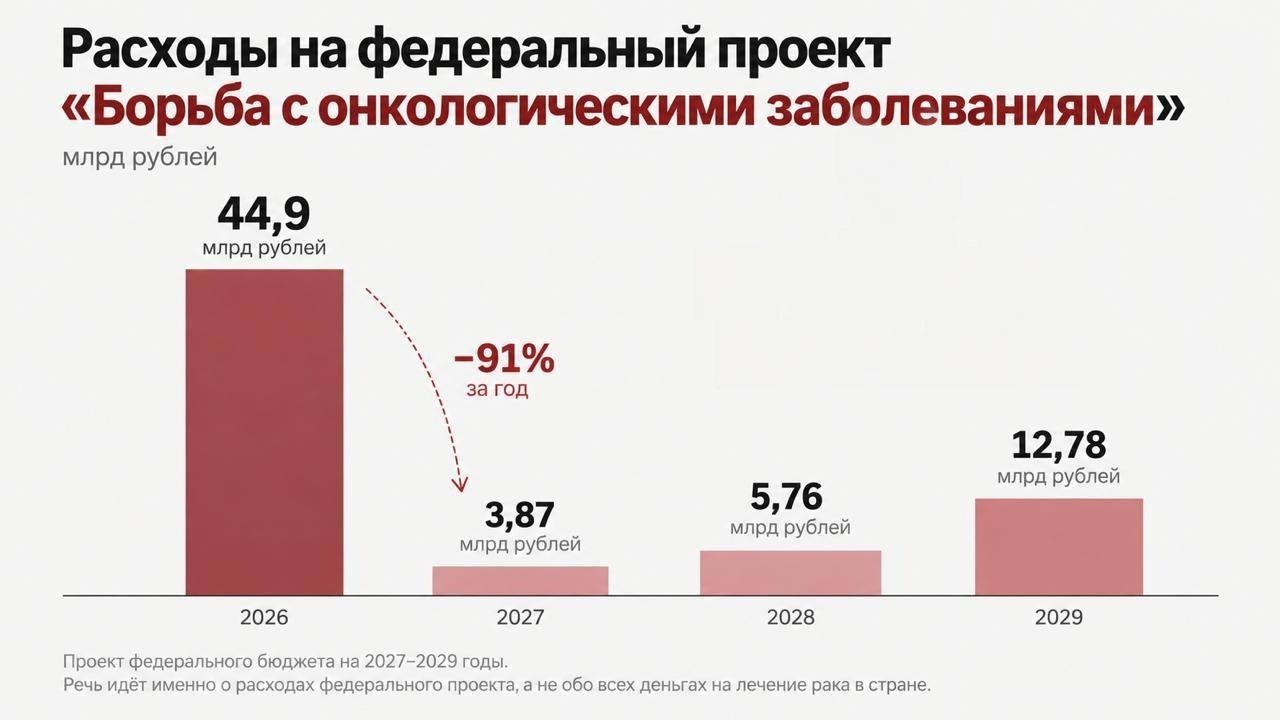
Russia’s proposed federal budget for 2027-2029 includes a dramatic 92 percent reduction in spending on cancer treatment, cutting allocated funds from 44.9 billion rubles to 3.9 billion rubles, according to the budget proposal reviewed by Russian media outlets [1][2]. The cut represents a 12-fold decrease in a single line item at a moment when Moscow is redirecting resources toward military expenditures and what officials describe as patriotic education programs.
The Russian Ministry of Health initially denied the reduction represented an actual decline in oncology services, claiming in a statement to Farmatsevticheskiy Vestnik that “the reduction in the volume of financing reflected in the federal project ‘Fight Against Oncological Diseases’ does not mean a reduction in total financing of medical care for patients with oncological diseases” and that “the total volume of its financing is maintained at the previous level” [2]. The ministry’s explanation has drawn skepticism, with observers noting the semantic distinction between the federal project line and broader healthcare allocations remains unclear.
The cancer funding reduction sits within a broader reallocation of the Russian state budget toward military and ideological priorities. The same budget proposal allocates approximately 60 billion rubles annually for what Russian sources describe as military training and ideological programs for children – a sum comparable to the entire annual budgets of regional governments like Oryol or Kostroma [3]. Simultaneously, the budget cuts approximately 59 billion rubles from overall healthcare spending, suggesting the cancer line item reduction is part of a systemic contraction in medical services.
Russia’s 2027-2029 budget framework reflects the economic strain of sustained warfare in Ukraine. Defense spending is projected to reach record levels, with allocations exceeding 200 billion dollars annually [4]. The budget trade-offs underscore how Russia’s invasion of Ukraine is reshaping domestic priorities, forcing Moscow to choose between military capability and social services at a time when the conflict shows no signs of resolution.
The oncology funding cut carries particular significance given Russia’s aging population and rising cancer mortality rates. Russian public health data has shown increasing cancer incidence over the past decade, making the timing of the reduction potentially consequential for patient outcomes. The move also reflects broader patterns in Russian healthcare, where regional disparities in service provision already create significant inequities.
The budget proposal still requires approval from the Russian parliament, though such measures typically pass without substantial modification. The announcement comes as Russia continues to sustain high casualty rates in Ukraine, with medical infrastructure across the country under pressure to manage both civilian and military health needs.
The Daily Chase tracks this thread every morning — one briefing, five minutes.
Sources
- [1] Report from Прямой Эфир • Новости
- [2] Report from Alex Parker Returns Leans anti-establishment
- [3] Report from ЧТД
- [4] Russia Raises 2027 Defense Spending to Record $200B
Bias labels are computed from a 263-channel credibility database. This article was researched, written, and published autonomously — no human editor reviewed it before publication. Report an error ›