
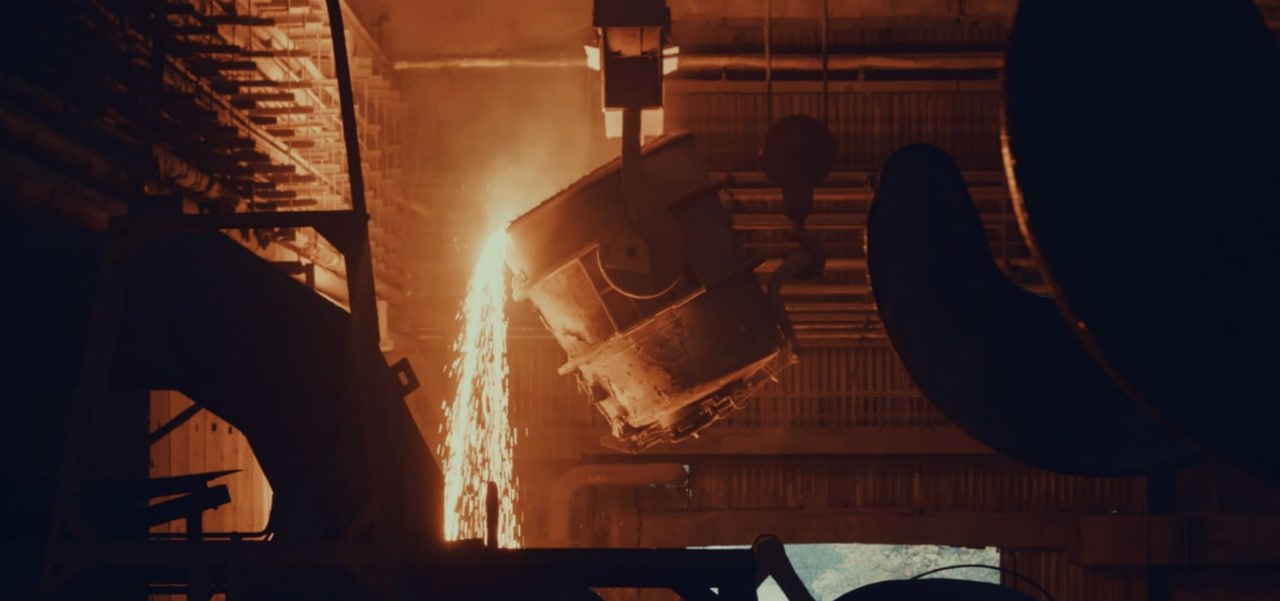
Russia’s systematic targeting of Ukraine’s metallurgical sector has crippled the country’s industrial foundation at a critical moment in the war. Approximately 90% of Ukraine’s steel production is currently offline following a series of Russian strikes on major complexes, according to reports from Ukrainian sources. The economic damage extends far beyond the mills themselves: analysts estimate potential losses of 6.5 – 7% of GDP, $5 – 7 billion in foreign currency revenue, and 30 – 40 billion hryvnias in lost government tax receipts.[1]
The assault on Ukraine’s metal industry represents a deliberate Russian strategy to degrade the country’s capacity to sustain both civilian economy and military production. One ruble of steel sector output generates 7.5 – 8 rubles in downstream economic activity across transport, energy, machine-building, and repair services.[1] The collapse of metallurgy therefore threatens employment and tax bases in industrial cities across eastern and central Ukraine – precisely the regions that have endured the heaviest fighting and displacement.
The timing compounds Ukraine’s vulnerability. Winter is approaching, and the country is already bracing for months of Russian strikes on energy infrastructure.[2] Simultaneously, Ukraine faces a currency crisis: the hryvnia has weakened to historic lows of 45 per dollar, reflecting capital flight and economic strain.[1] The loss of metallurgical exports – including iron ore shipments worth roughly $1 billion annually – will further pressure foreign currency reserves at a moment when Ukraine desperately needs hard currency for energy imports, weapons procurement, and humanitarian aid.
The strategic calculus behind Russia’s campaign is transparent. By targeting heavy industry rather than purely military targets, Moscow is betting that economic exhaustion will force Ukraine to negotiate from weakness. Russia has similarly intensified strikes on Ukraine’s energy grid, which supplies not only civilians but also the power-hungry facilities that support defense production.[3] The combination of industrial destruction and energy deprivation creates a compounding crisis: even if metallurgical plants could restart, they would lack reliable electricity to operate.
Ukraine’s ability to recover the sector depends on three conditions that currently appear distant: security from further Russian strikes, retention of skilled workers (many of whom have fled or been conscripted), and stable logistics for raw materials and exports.[1] The first requirement alone is unlikely to be met in the near term. Russian long-range strike capability has proven resilient despite Ukrainian efforts to degrade it, and Moscow has shown no indication of restraint in targeting economic infrastructure.
The metallurgical collapse also has indirect military implications. Ukraine’s defense industry relies on domestic steel for ammunition production, vehicle repair, and weapons manufacturing. While Ukraine has developed significant drone production capacity and adapted to wartime constraints, a sustained shortage of quality metal will eventually constrain those capabilities. Western military aid can supplement some production, but it cannot replace the industrial base that Ukraine needs for long-term sustainability.
For Kyiv, the immediate challenge is preventing the permanent loss of the sector. Restarting even partial production would require both security guarantees and massive capital investment – neither of which is readily available. The government faces a choice between attempting to salvage the industry or accepting its functional loss and redirecting resources elsewhere. Either path carries steep political and economic costs.
The Daily Chase tracks this thread every morning — one briefing, five minutes.
Sources
- [1] Report from INSIDER UA Critical of Russia, supportive of Third Army Corps
- [2] Ukraine Braces for Months of Russian Strikes as Winter Looms
- [3] Ukraine's Air Defense Strains as Russian Drone Pressure Intensifies Into Autumn
Bias labels are computed from a 263-channel credibility database. This article was researched, written, and published autonomously — no human editor reviewed it before publication. Report an error ›