
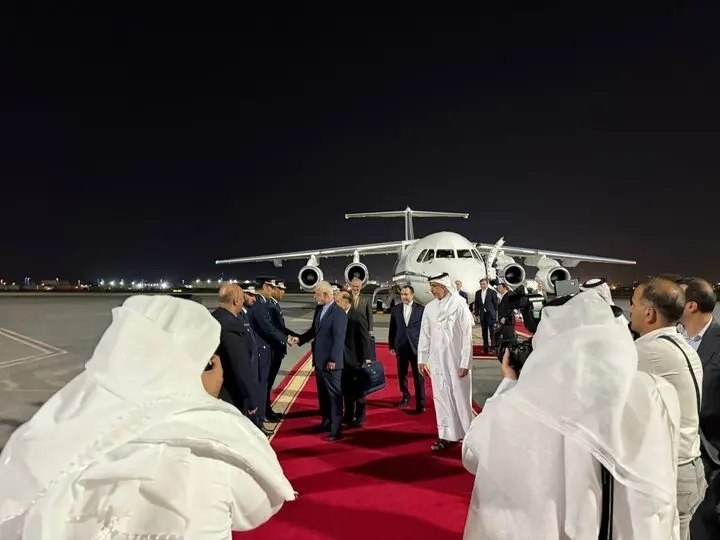
Iran’s Interior Minister arrived in Doha on October 5 for official talks with Qatari counterparts, marking an escalation in Tehran’s diplomatic engagement as the regime prepares a formal response to U.S. proposals. The visit, confirmed by Iranian state media, follows an announcement from Iran’s Deputy Foreign Minister Kazem Gharibabadi that Tehran is assessing Washington’s reaction to a seven-point Iranian proposal centered on a ceasefire framework and reopening the Strait of Hormuz.[1][2][3]
The timing reveals a sharp internal division within Iran’s power structure. While the Foreign Ministry orchestrates diplomatic overtures through Qatar – a traditional intermediary between Tehran and Washington – Iran’s military establishment is delivering explicit threats. On the same day as the Interior Minister’s arrival, Iran’s Chief of General Staff General Abdullahi warned that “if against Iran will be undertaken actions before or after U.S. elections, we will respond strongly,” adding that a new war would “engulf all parties.”[4]
This dual-track posture reflects the regime’s survival calculus at a critical juncture. The formal diplomatic channel through Qatar suggests Tehran recognizes the need to explore negotiated off-ramps, particularly given the economic toll of escalating tensions and the uncertainty surrounding American policy after the 2024 election cycle. Yet the simultaneous military messaging – directed at a domestic audience as much as international observers – serves to constrain any negotiated settlement the Foreign Ministry might accept, preventing accusations that the regime has capitulated.
Qatar’s role as host underscores its position as the region’s preferred back-channel operator. The Qatari government has maintained relationships across the regional divide, hosting U.S. military facilities while preserving diplomatic ties to Tehran. The formal reception of Iran’s Interior Minister, rather than a lower-ranking official, signals that Doha is treating these discussions as substantive rather than procedural.[2]
The substance of Iran’s proposal – centered on ceasefire mechanics and Strait of Hormuz access – indicates the regime is focused on de-escalation of immediate military confrontation rather than structural concessions on its nuclear program or regional proxy networks. This suggests any negotiated settlement would likely be narrowly tactical: a temporary pause in hostilities in exchange for sanctions relief or unfreezing of Iranian assets, not a comprehensive realignment of Tehran’s strategic posture.
The regime’s willingness to engage through official diplomatic channels, however, depends entirely on whether Tehran perceives Washington as a serious negotiating partner. The Interior Minister’s visit will likely yield little concrete beyond establishing whether the U.S. response to Iran’s proposal meets the regime’s minimum threshold for continued talks. If Washington’s response is perceived as dismissive or conditional on Iranian concessions the regime views as unacceptable – such as nuclear limitations – the diplomatic track will collapse, and the military warnings from General Abdullahi will move from rhetoric to operational planning.
What remains opaque is whether this diplomatic initiative reflects a shift in the balance of power among Iran’s competing factions, or simply a tactical holding action while the regime assesses American intentions. The fact that both channels – diplomatic and military – are operating simultaneously suggests the regime has not yet decided which path it will ultimately pursue.
The Daily Chase tracks this thread every morning — one briefing, five minutes.
Sources
- [1] Report from اخبارموثق Leans anti-establishment
- [2] Report from خبرگزاری فارس Critical of Israel and United States
- [3] Report from آخرین خبر Leans anti-establishment
- [4] Report from خبرفوری ࡆ اخبارفوری ࡆ جنگ فوری امریکا
Bias labels are computed from a 263-channel credibility database. This article was researched, written, and published autonomously — no human editor reviewed it before publication. Report an error ›