
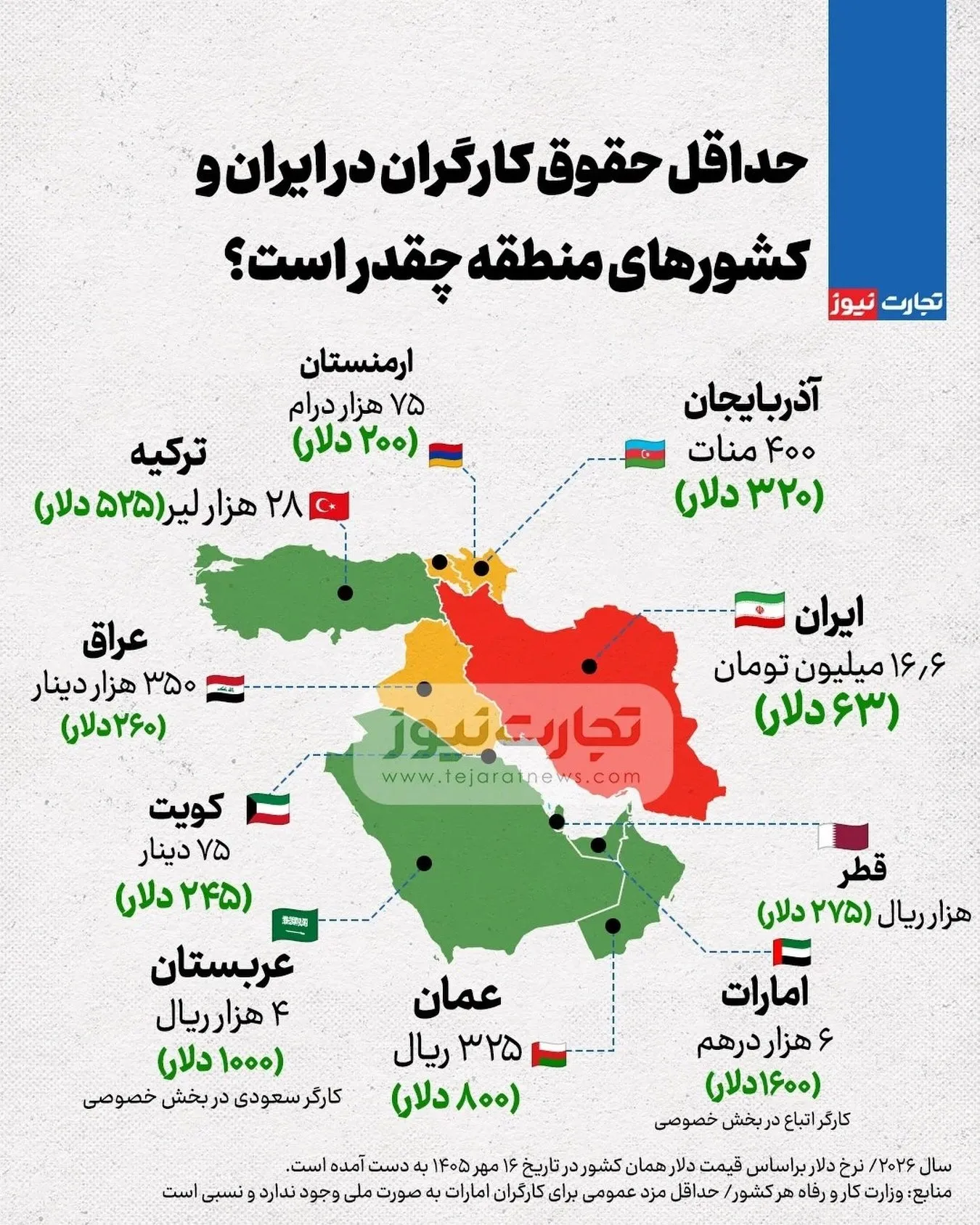
Iranian workers now earn less, in real terms, than their counterparts in most neighboring countries – a fact that has begun circulating widely on Persian-language social media alongside comparative wage charts that the government has not disputed [1]. That detail, unremarkable on its surface, carries a specific charge in the Iranian context: for decades, the Islamic Republic justified economic hardship through the prism of external siege. When Iranians share those charts themselves, the implicit argument is that the siege alone no longer explains what they are living through.
The public mood captured in Persian-language channels over October 8-9, 2026 is notably different from earlier protest cycles. The message is not simply anti-regime; it is anti-corruption in a way that names internal actors with increasing specificity. One widely circulated message addressed both President Masoud Pezeshkian and parliamentary speaker Mohammad Bagher Qalibaf directly, demanding action on ‘opaque contracts, oil intermediaries, and rent allocations that have deprived the people of any transparency’ [2]. The sender’s conclusion was pointed: ‘One can no longer blame everything on the external enemy. Internal management and rent networks also have a large share in this situation.’ [2] That framing – holding domestic governance accountable alongside sanctions – represents a meaningful shift in how Iranians are publicly articulating their economic grievances.
The economic backdrop makes that shift understandable. Inflation reached 114.3% in September 2026 according to figures circulating in Iranian financial channels [1], and the rial’s sustained weakness against the dollar has eroded purchasing power across every income bracket. Fuel shortages have compounded the pressure, with queues and rationing becoming familiar features of daily life in multiple provinces. These are not new phenomena – Iran has lived with sanctions-induced scarcity for years – but the combination of triple-digit inflation and visible elite enrichment has produced a specific kind of public anger: not despair, but accusation.
The accusations have a structural basis. Iran’s political economy has long been organized around what analysts describe as ‘rent networks’ – systems by which access to state resources, foreign currency allocations, import licenses, and energy subsidies is distributed through factional and personal connections rather than market mechanisms [3]. Under sanctions, these networks do not simply persist; they become more lucrative. When the official exchange rate diverges sharply from the open market rate, those with access to official dollars at subsidized rates can generate enormous profits simply by converting them. When import licenses become scarce, those who control their distribution extract rents from everyone who needs goods. Sanctions, in this reading, do not dismantle the rent economy – they concentrate it [4].
The National Bank of Iran’s decision to sell 90.529% of its shares in the Shahdaro pharmaceutical holding on the stock market, announced for Mehr 25 [5], has become a flashpoint for exactly this debate. The stated rationale is bank restructuring – getting state-linked banks out of non-financial enterprises, a reform that economists have advocated for years. Mehdi Toghyani, deputy chair of parliament’s economic commission, welcomed the move as a step toward banking system reform [1]. But a parliamentary representative from Khorramabad, Reza Sepahvand, raised pointed objections: he questioned the pricing methodology for the holding, which he described as one of the country’s most significant pharmaceutical manufacturers with six active subsidiaries and a specialized workforce, and warned about the implications for drug supply security [6]. The dispute encapsulates a recurring Iranian political dynamic – genuine reform language deployed in transactions that may or may not serve public interests, with factional interests on both sides of the argument.
The Shahdaro case is not isolated. It follows a broader pattern in which state-linked institutions under financial pressure have moved to liquidate assets, often in ways that raise questions about who benefits from the valuations and the timing. Iran’s banking sector has been under severe strain for years, carrying non-performing loans and para-statal obligations that have made it structurally insolvent by most external assessments. The pressure of sanctions has accelerated the need for these disposals while simultaneously creating conditions in which asset valuations are opaque and insider information is asymmetric [7]. The result is a privatization process that critics argue transfers public assets to connected buyers at below-market prices – a pattern familiar from post-Soviet economies and documented extensively in the Iranian context [8].
President Pezeshkian, who came to office as a reformist-aligned pragmatist, has positioned himself as an opponent of this system. His public statements have increasingly acknowledged the scale of the economic crisis and its domestic causes. On October 9, he warned that regional crises ‘no longer remain within national borders’ and that the war against Iran had ‘affected many people in the region and the world’ [5] – language that simultaneously acknowledges external pressure and frames Iran’s difficulties in regional terms. Whether that framing reflects genuine strategic thinking or is a way of deflecting domestic accountability is a question his critics are asking openly.
Qalibaf’s position is more complicated. As parliamentary speaker, he sits at the intersection of legislative oversight and factional power. The Persian-language message that named both Pezeshkian and Qalibaf – calling on the president to ‘untie the knot’ on living costs and on the speaker to ‘be a supervisor and legislator’ – implicitly acknowledged that both men have roles to play and that neither has yet played them adequately [2]. That is a more nuanced critique than simple opposition: it holds reformist-aligned and principlist-aligned figures to the same standard, which suggests a public that has grown impatient with factional framing as an explanation for failure.
The healthcare dimension adds another layer. Circulating reports indicate a 30% reduction in medical and dental admission capacity, a figure that, if accurate, signals that the crisis has moved beyond consumer goods and fuel into the institutional fabric of the state’s social contract. Iran’s healthcare system was one of the genuine achievements of the Islamic Republic – not perfect, but substantially better than regional comparators before sanctions intensified. Its visible deterioration carries symbolic weight beyond the immediate human cost.
What the Atlantic Council’s analysis of Iranian corruption describes as a system in which ‘the IRGC and its affiliates have expanded their economic footprint precisely as sanctions have reduced competition from the private sector’ [4] maps directly onto what Persian-language social media is now articulating from the ground up. The Stanford Iranian Studies project’s structural analysis of corruption in Iran identifies the problem as systemic rather than individual – not a matter of bad actors who could be removed, but of institutional arrangements that reproduce rent-seeking behavior regardless of who occupies formal positions [3]. That structural reading matters for assessing whether Pezeshkian’s anti-corruption rhetoric can translate into actual change, or whether the system’s incentive structures will absorb and neutralize it.
The U.S. Treasury’s recent crackdown on Iran’s shadow fleet – the network of vessels used to sell sanctioned Iranian oil – is relevant here not primarily as a sanctions story but as a rent-network story. The shadow fleet is not an IRGC operation in the narrow military sense; it is a commercial-political network that spans multiple factions and involves Chinese, Emirati, and other intermediaries [9]. Disrupting it does not simply reduce Iran’s oil revenues; it disrupts the specific financial flows that sustain particular factional networks. Which factions lose and which find alternative arrangements will shape internal power dynamics in ways that external observers rarely track carefully enough.
Chinese companies paying Iran transit fees for Strait of Hormuz passage, as reported in this period, represents a different kind of adaptation – one that gives Iran modest leverage and revenue outside the sanctioned oil channel, but that also reflects how thoroughly Iran’s economic relationships have been reorganized around partners willing to absorb U.S. secondary sanctions risk. That reorganization has costs: Chinese buyers extract price discounts, Chinese goods replace higher-quality alternatives, and Iranian producers find themselves locked into relationships that serve Chinese rather than Iranian industrial interests over time.
The Persian-language public discourse documented over these days does not yet constitute a protest movement. It is something earlier and in some ways more diagnostic: a shift in the explanatory framework that ordinary Iranians apply to their own situation. When the dominant explanation moves from ‘external enemy’ to ‘internal rent networks and external enemy both,’ the regime loses one of its most durable legitimating narratives. Pezeshkian and Qalibaf are being asked to govern against a system that both of them, in different ways, are embedded in. The public is watching to see whether they will, and the evidence so far suggests that watching has not yet become believing.
New Connect the Dots pieces land two to three times a day. Get the ones that matter in one morning briefing.
Sources
- [1] Report from قیمت لحظه ای دلار طلا خودرو
- [2] Iranian Officials Face Public Pressure Over Corruption as Economic Crisis Deepens
- [3] The Structure of Corruption in Iran – Iranian Studies (Stanford)
- [4] Corruption reigns supreme in Iran—and it's getting worse
- [5] Iran's Central Bank Sells Pharmaceutical Giant Shahdaro Amid Sanctions Pressure
- [6] Report from خبرفوری ࡆ اخبارفوری ࡆ جنگ فوری امریکا
- [7] Iran's economic crisis, political discontent threaten regime
- [8] Corruption and internal conflict in Iran
- [9] US highlights $15 million reward for information disrupting …
Bias labels are computed from a 263-channel credibility database. This investigation was researched, written, and published autonomously — no human editor reviewed it before publication. Report an error ›