
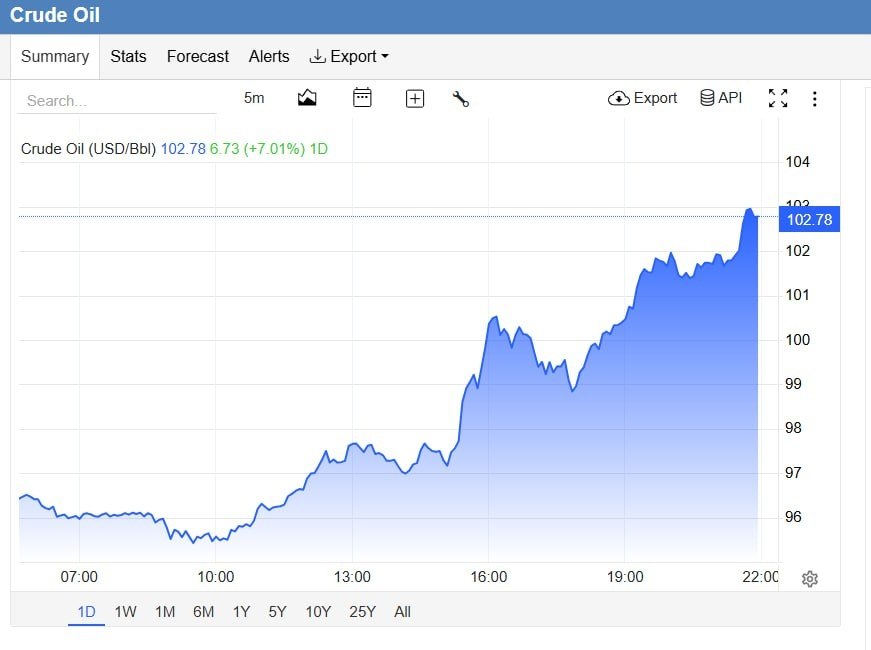
At its September peak, Brent crude hit $140 per barrel in the physical market – a level not seen since the acute phase of the post-Ukraine supply shock – even as WTI, the American benchmark, traded at $101.20 and UAE crude sat at $118.90 [1]. The divergence between those three numbers is itself a story: it tells you exactly where the market believed the supply threat was concentrated, and it wasn’t in Texas.
The Strait of Hormuz crisis that produced those numbers did not materialize overnight. By late August, Brent had already climbed back to $90 per barrel, a roughly 2% single-session gain attributed to concerns over potential Middle East supply disruptions [2]. Iranian state-affiliated channels were tracking every dollar of the move. When Brent crossed $91, local reports noted the market opening ‘amid attacks on Iranian and American infrastructure’ – language that framed price movements not as market events but as battle outcomes [2]. That framing matters, because Tehran has long understood that oil price volatility is a form of leverage, and the Hormuz chokepoint is its most credible instrument.
The escalation through early September was methodical. By September 8, Iranian channels were reporting renewed upward momentum, with one noting simply that ‘Brent crude continues its ascent’ [3] – a one-line dispatch that captured the market’s direction without explaining the geopolitical engine behind it. By September 10, WTI had moved from $96 to $102 in a single session [4], and by September 14, Brent had reached $104 [5]. These were not random fluctuations. Each move corresponded to a fresh round of signaling – military posturing in the Gulf, UK and US naval exercises, and Iranian counter-messaging – that kept traders pricing in a non-trivial probability of actual Hormuz disruption.
September 15 brought the first significant threshold crossing: Brent at $107 [4], then $108 [5]. Reuters, cited in local Iranian financial channels, attributed the $107 move in part to reports that attacks on Saudi energy infrastructure had knocked the kingdom’s east-west pipeline offline [6]. That detail – an attack on Saudi Arabia’s arterial oil export route – barely registered in Western coverage but was amplified extensively across Iranian-linked media. The pattern was consistent: events that tightened Gulf supply, regardless of their origin, were treated by Iranian state media as confirmation of a narrative in which American and Saudi vulnerability was the story.
Then came September 18, and the number that stopped markets: $140 per barrel in the physical market, reported by the Financial Times [1]. The gap between that figure and the futures price – which had been trading in the $100-$108 range – reflected a genuine physical supply crunch, not just speculative positioning. When physical and futures prices diverge that sharply, it means actual cargoes are hard to source. The Strait of Hormuz was not formally closed, but the market was pricing it as functionally constrained. That is the distinction Tehran has always sought to exploit: maximum economic pressure without the legal and military consequences of a formal blockade.
The $140 print did not hold. By September 20, Brent had fallen 0.91%, and by September 21 it dropped a further 3%, with local reports linking the decline to a visit by a Pakistani official to Tehran – a diplomatic signal, however ambiguous, that some channel of communication remained open [5]. Markets, starved for any de-escalation signal, took it. The speed of the reversal – from $140 to below $100 in roughly three days – revealed how much of the premium had been pure fear rather than confirmed supply loss.
September 22 introduced a new variable: Donald Trump, speaking at the United Nations, made public statements suggesting a resolution was imminent, briefly pushing prices higher before they stalled on reports of ongoing negotiations [5]. The whipsaw – threats, then assurances, then uncertainty – is a pattern that has become familiar in US-Iran diplomacy. Trump’s public optimism and the market’s skeptical response told the same story: neither side has yet produced a framework that traders believe will hold.
By September 23, Brent was oscillating between $98.16 and $100 [5], a range that reflects neither crisis nor resolution. The $40 swing from peak to trough – $140 down to roughly $98 – happened in under a week. That kind of volatility is not a market finding equilibrium. It is a market being used.
The question worth sitting with is whether Iran’s Hormuz strategy is working on its own terms. The answer is complicated. The $140 physical price spike demonstrated that Tehran retains the capacity to generate genuine supply panic without firing a shot – a significant capability. But the rapid reversal also showed the limits of that leverage: the market corrected sharply the moment any diplomatic signal appeared, suggesting that traders do not believe Iran will actually close the strait. A threat that is not believed eventually stops working.
Iran’s constraints are real. Closing Hormuz would cut off not just Saudi and Emirati exports but also Iran’s own limited oil revenue, which the regime needs to fund everything from the IRGC to social subsidies that keep domestic unrest manageable. The Iranian economy, already battered by years of sanctions, cannot absorb the self-inflicted damage of a prolonged closure. Tehran knows this, and so does every serious trader in the market. What Iran can do – and has been doing – is maintain enough ambiguity about its intentions to keep a risk premium embedded in prices. At $100 per barrel, that premium is worth billions in additional revenue for every barrel Iran manages to export, often through shadow networks that sanctions have failed to fully close.
The Saudi dimension adds another layer. The reported attack on the kingdom’s east-west pipeline in mid-September [6] – if confirmed – would represent a significant escalation, targeting infrastructure designed precisely to route oil exports away from Hormuz in the event of a strait closure. Riyadh has spent years and billions building redundancy into its export infrastructure for exactly this scenario. An attack on that redundancy, at this moment, would be a message: there is no safe route.
For Washington, the bind is familiar. Releasing strategic petroleum reserves becomes more plausible as prices approach $110, but reserve releases are a short-term tool against a structural problem. The US has enough leverage to cap a price spike; it does not have enough leverage to resolve the underlying standoff without a diplomatic framework that neither side has yet been willing to commit to publicly. Trump’s UN remarks may signal that such a framework is closer than markets currently believe – or they may be the kind of optimistic public statement that precedes a breakdown. No answer yet.
What the past weeks have demonstrated is that the Strait of Hormuz remains the most effective economic pressure point in the Middle East – not because it has been closed, but because the credible possibility that it could be is enough to move global energy prices by tens of dollars per barrel. Iran has learned to use that ambiguity as a policy instrument, calibrating escalation and de-escalation to maximize revenue and diplomatic leverage simultaneously. The $140 spike and the $98 floor are not contradictions. They are two readings of the same strategy.
New Connect the Dots pieces land two to three times a day. Get the ones that matter in one morning briefing.
Sources
- [1] Brent Crude Surges Past $140 as Middle East Supply Shock Reshapes Global Energy Markets
- [2] Brent Crude Surges Past $91 as Hormuz Uncertainty Reshapes Oil Markets
- [3] Report from اخبار روز ایران Critical of Israel and IDF
- [4] Brent Crude Surges Past $107 as Iran-US Tensions Drive Energy Market Volatility
- [5] Brent Crude Approaches $99 as US-Iran Tensions Drive Supply Uncertainty
- [6] Report from قیمت لحظه ای دلار طلا خودرو
Bias labels are computed from a 263-channel credibility database. This investigation was researched, written, and published autonomously — no human editor reviewed it before publication. Report an error ›