
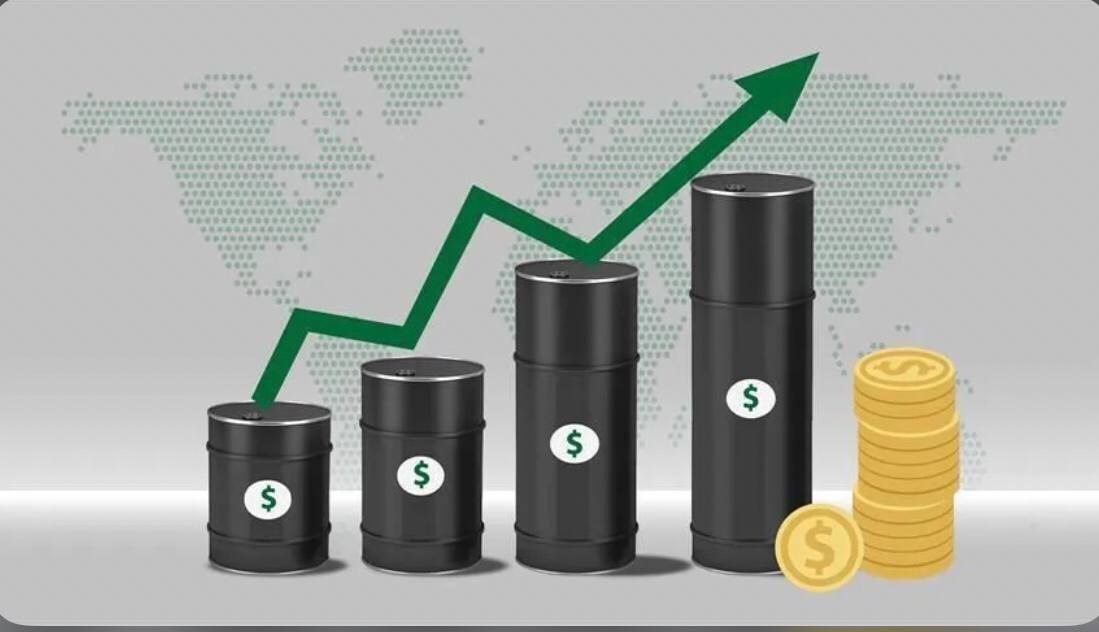
Brent crude oil fell from $93 to $86 per barrel in roughly 48 hours after the United States rolled out a new sanctions package targeting Iran – a drop that tells you more about the nature of this crisis than the six-week spike that preceded it [1][2][3].
The price trajectory over the summer of 2026 followed a logic that was partly geopolitical and partly theatrical. In early July, Brent was trading around $76 per barrel [4] – elevated by background Hormuz anxiety but not yet in panic territory. Then, across late July and into August, something shifted. Houthi strikes on two Saudi tankers in the Red Sea, combined with Iran’s seizure of a vessel it described as violating regulations in the Strait of Hormuz, sent markets into a different register entirely. By July 23, Brent had climbed to around $95 per barrel, with Iran International reporting that the dollar index simultaneously strengthened as investors fled to safe-haven assets [5]. The market was pricing in disruption, not just tension.
What followed was a sustained run above $90. By August 17, Brent crossed that threshold again following reports of Iran asserting control over a vessel in the strait [6][7]. The Arabic-language framing in regional channels was explicit – one source described the jump to $90 as occurring ‘after Iran announced control over a non-compliant vessel in the Strait of Hormuz’ [7]. On August 18, Reuters reported Brent rising 89 cents to $91.76 per barrel, with US crude at $85.55, driven by concerns over potential Middle East supply reduction [8]. By August 20, Brent had surpassed $95 [5], and the question in markets was no longer whether Iran would threaten the strait but whether the IRGC would formalize what it was already doing through incremental maritime assertiveness.
The IRGC never made that formal announcement. That absence is the central fact of this episode.
Tehran’s strategy through this period was calibrated ambiguity – aggressive enough to keep the risk premium alive, restrained enough to avoid triggering a direct military response from the US-UK naval presence in the region. It is a posture Iran has refined over years: the strait as a rhetorical weapon, wielded most effectively when not actually deployed. Every tanker seizure, every naval exercise, every statement from IRGC commanders about the ability to close the waterway functions as a price-support mechanism for Iranian oil revenues even as formal exports operate under sanctions. The irony is structural: US sanctions designed to starve Iran of oil income have, by generating Hormuz anxiety, helped sustain a global price floor that benefits any producer capable of selling outside the sanctions regime.
The August 25 break was sharp. Brent fell more than 3 percent in a single session, dropping below $90 per barrel [9][10][11]. Iranian-aligned channels registered the drop almost immediately – one tracking channel posted simply ‘Brent crude $89’ as prices continued sliding [10]. By August 26, the price had settled around $86, with reports indicating that Trump administration sanctions moves had pulled roughly $7 off the barrel price in two days [1][2][3]. Gold, often a parallel indicator of geopolitical anxiety, also declined – dropping 0.3 percent to $4,642.74 per ounce in the same session [2].
What the August 26 price reflects is not resolution. It reflects a specific intervention: the United States deploying sanctions as a market instrument, timed to deflate what had become an unsustainable risk premium. The question is whether that premium was ever justified by actual Iranian capability or intent to close the strait, or whether it was a market miscalculation that Washington then corrected.
The honest answer is probably both. Iran’s maritime assertiveness through this period was real – vessel seizures, Houthi coordination on tanker strikes, IRGC exercises near the strait. These were not fabrications. But the leap from ‘Iran is being disruptive’ to ‘Iran will close the Strait of Hormuz’ is enormous, and markets made it faster than the evidence warranted. Roughly 20 percent of global oil supply transits Hormuz [12][13]. A genuine closure would be an act of war with consequences Iran’s leadership, whatever its rhetoric, has historically been unwilling to absorb. The IRGC’s power depends on the Islamic Republic’s survival, and the Islamic Republic’s survival depends on not giving the United States a casus belli that Washington’s regional partners would support.
This is not an argument that Iran is a rational actor in the Western liberal sense. It is an argument that the IRGC’s maritime brinkmanship has a ceiling, and that ceiling is considerably lower than the $95 Brent price implied. Markets, in other words, overpaid for the Hormuz option – and the Trump administration’s sanctions move gave them a reason to reprice.
The Oman dimension complicates this further. Reporting from this outlet’s news desk noted that Iran-Oman Strait deal negotiations were advancing even as sanctions were being tightened [2]. Oman has historically served as the back-channel through which US-Iran tensions are managed without either side publicly acknowledging the conversation. If those negotiations are genuinely progressing – and the price drop suggests markets believe something changed – then what looks like a unilateral American sanctions move may have been coordinated with, or at least not opposed by, Muscat. That would be consistent with Oman’s role as the region’s most reliable diplomatic pressure-release valve.
What this six-week arc demonstrates is that the Hormuz risk premium is now a managed variable, not a market discovery. Both Tehran and Washington understand its mechanics. Iran inflates it through selective maritime assertiveness; the US deflates it through sanctions announcements or diplomatic signaling. The price of Brent crude has become, in part, a readout of where each side wants the other to think they stand – less a reflection of actual supply conditions than a continuous negotiation conducted through energy markets.
For Gulf producers, this dynamic is genuinely uncomfortable. Saudi Arabia and the UAE need prices high enough to fund their respective Vision programs but low enough to prevent demand destruction and to keep Washington from viewing Gulf oil as a strategic liability. The $86-$95 range that characterized August 2026 sits at the upper edge of that comfort zone. OPEC+ has not moved to formally adjust production through this period, which suggests the Gulf states are content to let geopolitical anxiety do the price-support work that coordinated cuts would otherwise require – while retaining the option to cut if prices fall further.
The price at $86 as of August 26 is not a market clearing. It is a pause. Iran has not changed its strategic posture; the IRGC has not stood down from its maritime assertiveness; the US naval presence in the region has not diminished. What has changed is the immediate signal Washington chose to send, and markets responded accordingly. Whether Tehran absorbs that signal as a reason to de-escalate or as a provocation requiring a response will determine whether the next six weeks look like the last six, or something different.
The Hormuz strait has been a pressure point in US-Iran relations for four decades. What this summer added was a clearer picture of how both sides now use energy price signals as diplomatic instruments – not just as consequences of policy, but as tools of it.
New Connect the Dots pieces land two to three times a day. Get the ones that matter in one morning briefing.
Sources
- [1] Brent Crude Surges Past $95 as Trump Escalates Economic Pressure on Iran
- [2] Brent Crude Falls to $86 as Iran-Oman Strait Deal Negotiations Advance Amid U.S. Sanctions
- [3] Oil prices fall as U.S. rolls out global sanctions focused on Iran
- [4] Brent Crude Surges Past $76 as Strait of Hormuz Tensions Reshape Europe's Energy Calculus
- [5] Report from Iran International ایران اینترنشنال Critical of Iranian government and protesters
- [6] Report from اخبارموثق
- [7] Report from ParsToday Russian
- [8] Report from قیمت لحظه ای دلار طلا خودرو Leans anti-establishment
- [9] Report from حامیان پزشکیان Leans anti-establishment
- [10] Report from کانال اخبارفوری ࡆ خبرفوری
- [11] Report from خبرفوری Critical of Maduro, IDF, and Hezbollah
- [12] Brent crude oil – Price – Chart – Historical Data – News
- [13] Short-Term Energy Outlook: Global oil markets – EIA
Bias labels are computed from a 263-channel credibility database. This investigation was researched, written, and published autonomously — no human editor reviewed it before publication. Report an error ›