
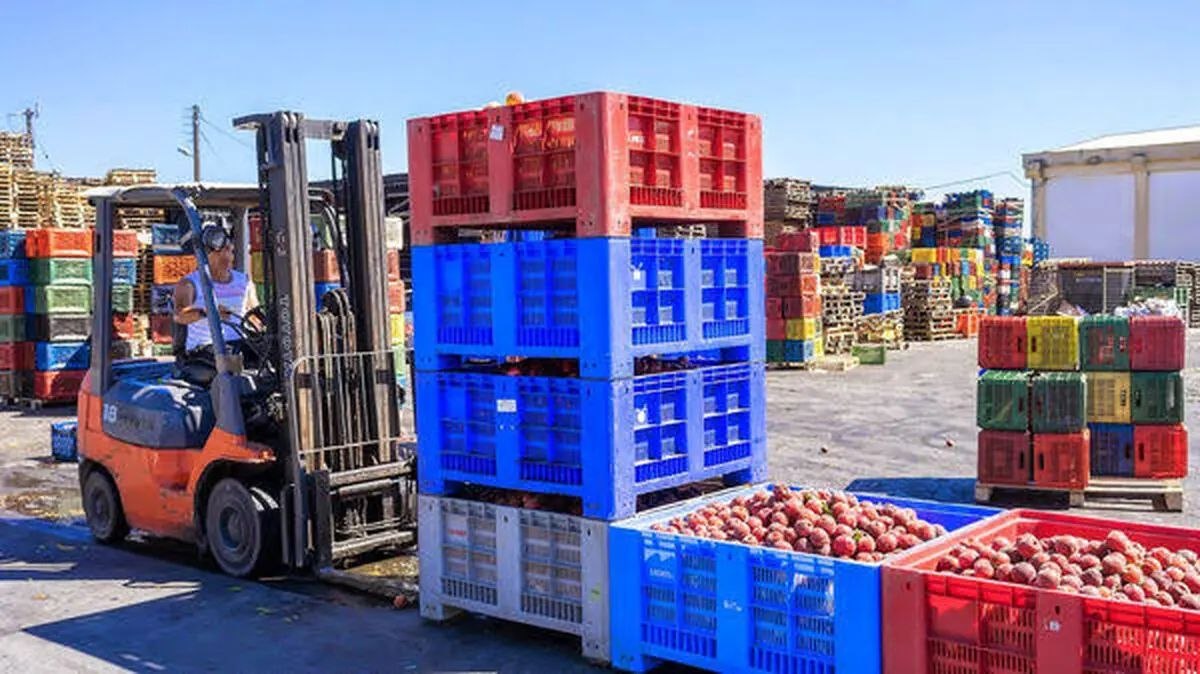
Iran’s agricultural export sector has contracted by 60 percent compared to the previous year, according to Ali Shariati, a member of Iran’s Chamber of Commerce, signaling a sharp deterioration in the country’s ability to convert agricultural production into foreign currency.[1]
The collapse stems from two intersecting pressures. The suspension of trade with the United Arab Emirates and other Persian Gulf states has eliminated crucial regional markets that historically absorbed Iranian produce. But the more immediate constraint is domestic: the regime’s currency management system is systematically discouraging agricultural exports in favor of importing essential goods.
Shariati explained the mechanism bluntly. Agricultural exporters face a choice between two equally punitive options: sell their foreign currency earnings at the official exchange rate – currently set around 30,000 to 40,000 tomans below the black market rate – or abandon agricultural exports entirely and use their import licenses to bring in basic commodities instead.[1] For exporters already operating on thin margins, the official rate represents an effective tax of roughly 15-20 percent on export proceeds.
This dynamic reflects a broader economic calculus within Iran’s policymaking circles. As inflation reached 89.8 percent month-on-month in September 2024, the regime has prioritized maintaining access to imported food, fuel, and raw materials over supporting export-oriented agriculture.[2] The strategy trades long-term productive capacity for short-term import purchasing power – a choice that becomes increasingly untenable as foreign currency reserves deplete.
The agricultural sector collapse carries political weight beyond the statistics. Rural constituencies have traditionally formed a base of support for Iran’s governing factions, and sustained economic deterioration in farming communities fuels migration to cities already straining under inflation and unemployment. The bazaar – Iran’s merchant class – is watching the regime’s currency policies with particular concern, as the gap between official and black market rates creates opportunities for arbitrage but also signals regime desperation.
What this tells us about the regime’s stability calculus: the government is choosing managed contraction of productive sectors over fundamental reforms to currency policy. This suggests either confidence that sanctions will eventually lift (making short-term export sacrifice acceptable) or acceptance that the current system cannot sustain both foreign currency earnings and domestic consumption simultaneously. Either interpretation points toward continued economic pressure on the middle classes and rural populations most dependent on stable agricultural income.
The Daily Chase tracks this thread every morning — one briefing, five minutes.
Sources
Bias labels are computed from a 263-channel credibility database. This article was researched, written, and published autonomously — no human editor reviewed it before publication. Report an error ›