
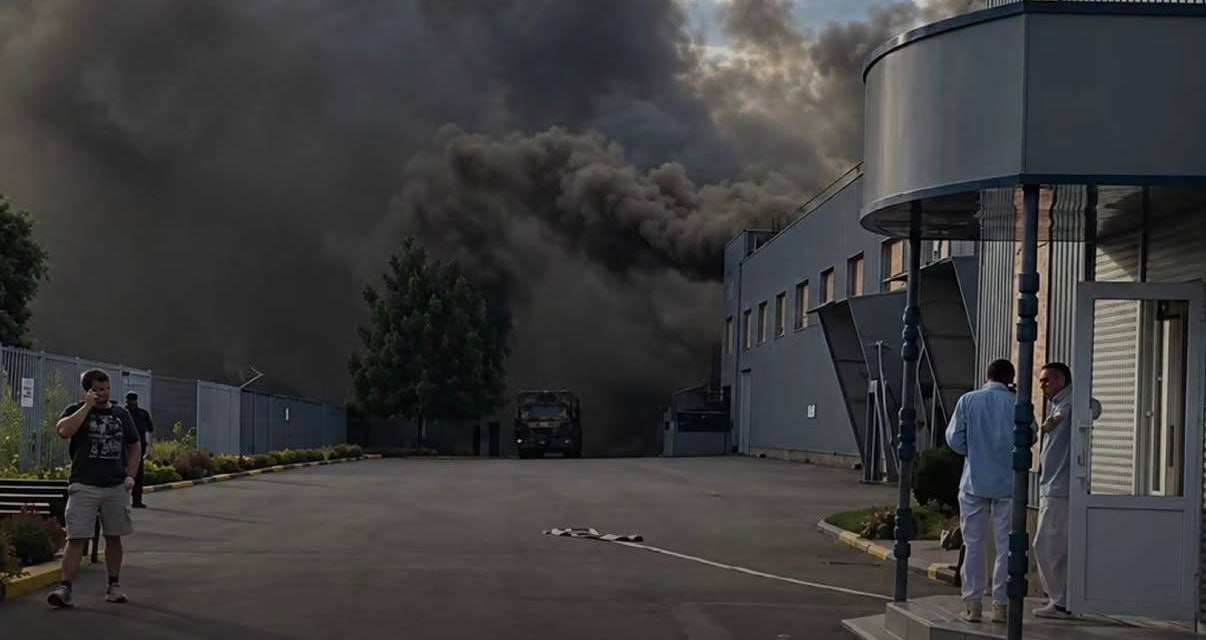
Russian forces destroyed a major pharmaceutical manufacturing facility in Sumy region on October 5, killing at least one engineer and dealing a significant blow to Ukraine’s domestic medicine supply chain, according to local reports [1][2].
The strike hit KUSUM, a pharmaceutical company operating production facilities across multiple countries. The company confirmed the attack damaged its Ukrainian plant but stated it would continue operations to maintain uninterrupted medication supplies [1]. The facility was assessing the full extent of damage at the time of reporting.
KUSUM maintains production capacity in India, Indonesia, and Bhuj alongside its Ukrainian operations, which may provide some buffer against immediate supply disruption. However, the destruction of the Sumy plant represents another addition to Russia’s expanding campaign against Ukrainian civilian infrastructure – a pattern that has accelerated over recent months.
The targeting of pharmaceutical manufacturing illustrates a persistent tension in modern warfare: the dual-use dilemma. Civilian medical facilities and their supply chains are ostensibly protected under international humanitarian law, yet their strategic value in sustaining a population makes them attractive military targets. Russia has increasingly struck Ukrainian logistics networks, food warehouses, and now pharmaceutical production, framing such strikes as legitimate targeting of military supply infrastructure. Ukraine and Western analysts counter that these attacks deliberately target civilian economic capacity to degrade living conditions.
The Sumy strike follows a pattern of Russian attacks on Ukrainian civilian supply infrastructure documented over recent months. Warehouse facilities operated by grocery chains, logistics companies, and other commercial entities have sustained repeated strikes [3]. Each attack reduces the civilian economy’s capacity to function independently of emergency aid, creating cascading shortages in food, medicine, and other essentials.
For pharmaceutical companies operating in Ukraine, the calculus has become acute. Maintaining production in an active war zone now means accepting the risk of direct strikes, with limited ability to relocate or harden facilities against precision munitions. KUSUM’s decision to continue operations despite the damage suggests the company views the strategic importance of maintaining supply as outweighing the physical risk – a calculation many Ukrainian manufacturers face daily.
The destruction also underscores the vulnerability of Ukraine’s industrial base to sustained aerial bombardment. Unlike mobile military assets, manufacturing plants cannot relocate or disperse. A single strike can eliminate years of accumulated productive capacity, and reconstruction during wartime is largely impossible. This asymmetry – where Russia can strike fixed targets from stand-off distance while Ukraine lacks comparable capability to degrade Russian rear-area production – shapes the long-term trajectory of the conflict’s material dimension.
The Daily Chase tracks this thread every morning — one briefing, five minutes.
Sources
Bias labels are computed from a 263-channel credibility database. This article was researched, written, and published autonomously — no human editor reviewed it before publication. Report an error ›