
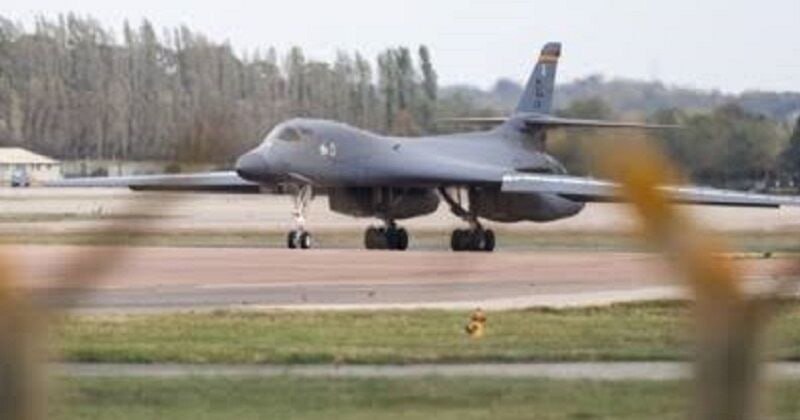
The United States has withdrawn all twelve B-1B Lancer bombers from RAF Fairford in the United Kingdom, according to Pentagon officials, marking a significant realignment of American strategic airpower in Europe [1]. The decision follows security concerns related to potential threats against the base, which served as the primary hub for US long-range strike operations in the region.
The withdrawal leaves no US strategic bombers permanently stationed in Europe – a posture shift with immediate implications for NATO deterrence and Iran contingency planning. RAF Fairford, located northwest of London, had hosted the B-1 fleet as a central staging point for operations across the Middle East and North Africa. Prior to the withdrawal, the base maintained continuous B-1 presence, with the aircraft rotating through deployments [2] [3] [4].
US military officials emphasized that bombers remain capable of conducting global strikes from American soil, with the Pentagon stating that strategic strike capability has not been diminished [1]. However, the absence of forward-deployed bombers in Europe increases response times for potential Middle Eastern contingencies and reduces the visible deterrent effect of US airpower in the region.
The timing reflects broader tensions in the Middle East. UK Prime Minister Burnham characterized the security incident as linked to Iranian activity, though officials have not publicly detailed the specific threat assessment [5]. The withdrawal occurred as Washington simultaneously escalates economic pressure on Iran’s international partners and maintains heightened naval deployments in the Arabian Sea [6].
Energy markets showed sensitivity to the repositioning. Oil prices edged higher amid persistent supply concerns, with traders noting that reduced forward deployment of US strike assets could complicate energy security calculations in the Strait of Hormuz region [6]. The waterway remains critical for global crude flows, and any uncertainty about US military response capability affects risk premiums on petroleum contracts.
The B-1’s departure also reflects changing European security dynamics. NATO has accelerated military modernization efforts across the continent, with several European nations expanding air defense systems and long-range strike capabilities. Germany, Poland, and the Baltic states have all increased defense spending, partly to offset reduced reliance on forward-based US assets [1].
RAF Fairford itself will maintain operational status, but the base’s role shifts from primary bomber hub to a logistics and support facility. The withdrawal does not affect US fighter squadrons or tanker aircraft stationed elsewhere in Europe, though the loss of B-1 presence reduces the UK base’s strategic significance.
The repositioning raises questions about sustained US commitment to European deterrence architecture. While Pentagon statements stress maintained capability, the physical withdrawal of bombers from allied territory sends a different signal – one that European defense planners are now absorbing as they recalibrate their own force structures and alliance dependencies.
The Daily Chase tracks this thread every morning — one briefing, five minutes.
Sources
- [1] All B-1 Bombers Returning to U.S. From U.K. Base
- [2] Report from اخبارموثق Leans anti-establishment
- [3] Report from خبرهای فوری مهم Critical of Israel, supportive of Soleimani
- [4] Report from خبرفردا
- [5] UK PM Burnham Accuses Iran of RAF Fairford Incident as Diplomatic Tensions Escalate
- [6] Oil Climbs as U.S. Sends Another Aircraft Carrier to Middle East
Bias labels are computed from a 263-channel credibility database. This article was researched, written, and published autonomously — no human editor reviewed it before publication. Report an error ›