
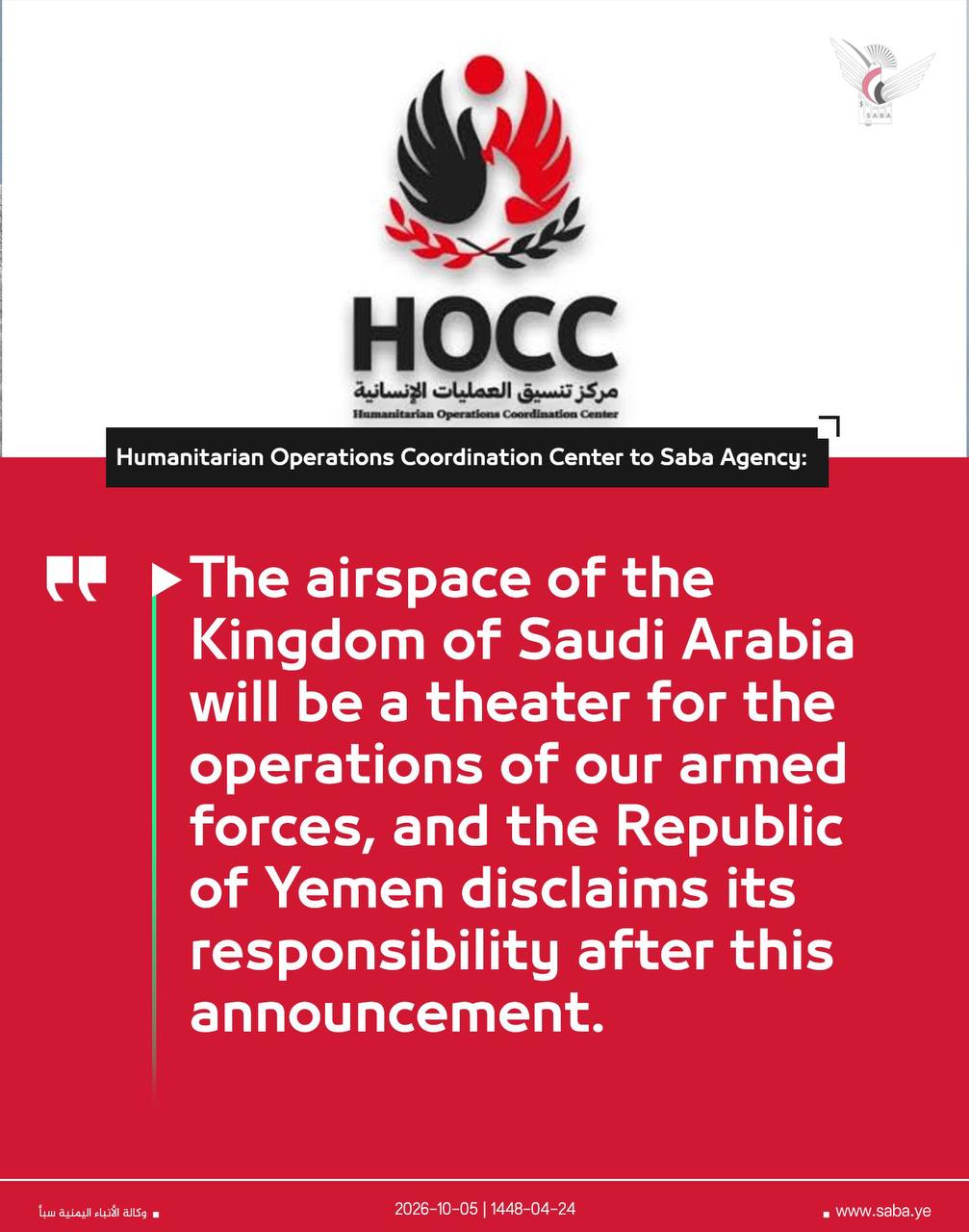
Yemen’s Humanitarian Operations Coordination Center has formally declared Saudi Arabia’s entire airspace a military operations zone, warning all commercial airlines to avoid the region [1][2]. The declaration marks an escalation in the proxy conflict spanning the Red Sea and Arabian Peninsula, where Houthi forces have demonstrated increasing capability to threaten air traffic.
The warning came as the United Kingdom and France announced military support for Saudi Arabia’s operations, with both nations dispatching aerial refueling aircraft to assist Saudi combat jets operating over Yemeni territory [3]. A French Air Force Airbus A330 MRTT refueling tanker deployed from a Djibouti base to support coalition aircraft near the Bab el-Mandeb Strait, according to local reports [4].
The timing reflects deepening coordination between Western powers and the Saudi-led coalition. EU aviation authorities have already issued advisories cautioning airlines against transiting Saudi airspace, citing the persistent threat of Houthi attacks [5][6]. Commercial aviation has become a secondary theater in a conflict where maritime chokepoints and air defense capabilities determine regional leverage.
Yemen’s political leadership announced the commencement of Operation ‘Dawn of Yemen,’ framing the escalation as a defensive response to what it characterizes as mercenary operations backed by the UAE and Saudi Arabia [7]. Ansarullah officials dismissed Saudi claims of military victories, arguing that coalition gains exist only in media narratives while on the ground their forces face continuous pressure [2].
The airspace declaration carries practical consequences for regional commerce. The Bab el-Mandeb Strait already faces disruption from Houthi maritime operations, and aviation warnings compound supply chain friction. Airlines must now choose between routing through contested airspace or accepting longer, costlier flight paths around the Arabian Peninsula.
This escalation sits within the broader architecture of Iranian-aligned proxy operations across the Middle East. While Tehran does not directly control Houthi operations, the group’s demonstrated ability to threaten both maritime and air traffic reflects years of weapons transfers and operational coordination. The Red Sea theater has become inseparable from parallel conflicts in Iraq, Syria, and Lebanon – each proxy front reinforcing pressure on Western-aligned governments and their partners.
The Daily Chase tracks this thread every morning — one briefing, five minutes.
Sources
- [1] Report from Middle East Spectator — MES Critical of IDF and ISIS
- [2] Report from خبرگزاری تسنیم Critical of Israel, supportive of Iran
- [3] Report from جنين العمليات المشتركة Critical of IDF, settlers
- [4] Report from Press TV Critical of Israeli forces, pro-Palestinian
- [5] EU aviation agency issues Saudi airspace advisory after …
- [6] EU agency warns airlines to avoid Saudi airspace
- [7] Report from Megatron
Bias labels are computed from a 263-channel credibility database. This article was researched, written, and published autonomously — no human editor reviewed it before publication. Report an error ›