
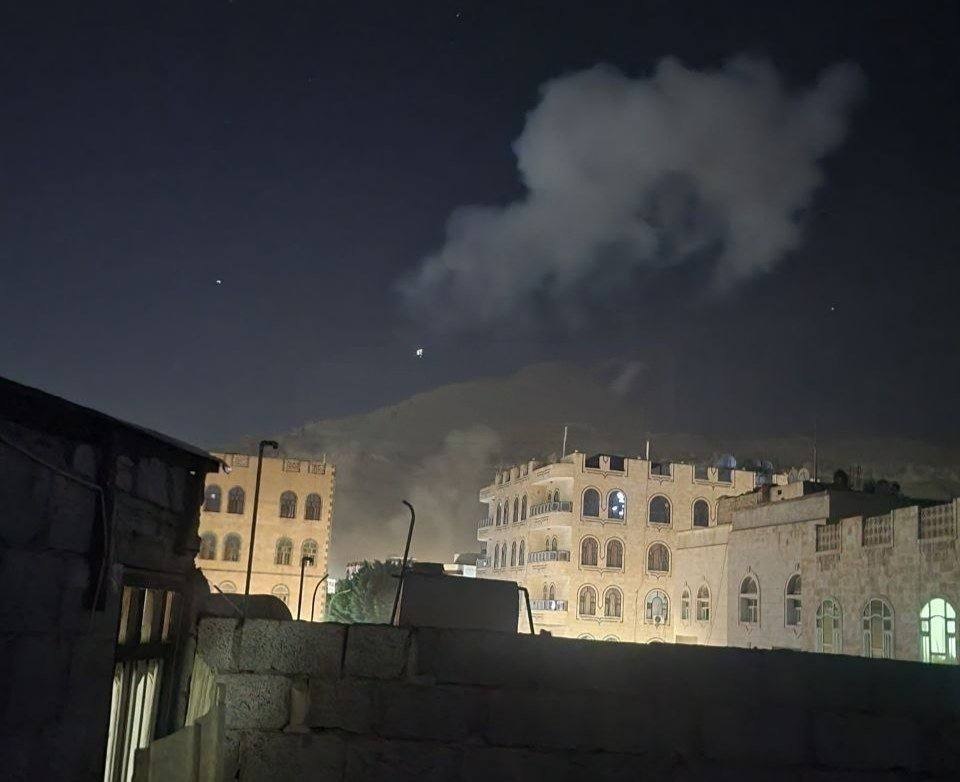
Saudi Arabia resumed aerial bombardment of Houthi-controlled territory on October 3, conducting 38 airstrikes across multiple Yemeni provinces in a single 24-hour period, bringing the total number of strikes since the latest escalation cycle began to 1,123.[1] The strikes targeted the Ta’izz, Zaydah, and Hajjah districts using F-15 and Typhoon aircraft, resulting in civilian casualties including women and children according to military statements.[1]
The operation triggered an immediate response from Houthi military leadership. Yahya Saree, the group’s military spokesperson, announced that Ansarullah had conducted what he characterized as a “quality military operation” against Saudi Aramco’s headquarters in Riyadh using ballistic missiles and unmanned aerial vehicles.[2] The attack prompted authorities in the Saudi capital to suspend all flights at Riyadh airport, with local sources confirming the closure followed reports of Houthi missile strikes on Saudi oil infrastructure.[3]
Satellite imagery documented the scale of the damage at Aramco facilities. A fire at the company’s refinery in Yanbu burned with heat intensity reaching 205 megawatts, with the site still actively burning hours after the initial strike.[4] An additional fire broke out at Aramco’s Riyadh operations following the drone and missile assault.[4] The attacks represent a significant escalation in the maritime and energy warfare dimension of Yemen’s proxy conflict, directly targeting Saudi Arabia’s economic lifeline.
The cycle of strikes reflects a familiar pattern in the Yemen war: Saudi airstrikes on Houthi-held northern territory trigger Houthi responses against Saudi infrastructure in the south and center of the kingdom. What distinguishes this October escalation is the demonstrated capability and willingness of Ansarullah to strike deep into Saudi territory with precision weapons, forcing the closure of the country’s primary international airport. Previous Houthi operations have targeted shipping in the Red Sea and Gulf of Aden; direct strikes on Aramco facilities represent an escalation in targeting strategy.[5]
U.S. intelligence has warned Saudi Arabia against further escalation, citing assessments that Houthi capabilities continue to grow despite years of Saudi-led coalition air campaigns.[5] The warning underscores a strategic dilemma for Riyadh: each round of intensive airstrikes produces tactical damage to Houthi positions but appears to correlate with more sophisticated Iranian-supplied or Iranian-designed weapons reaching the group’s arsenal.
The broader context involves coordination signals between Tehran-aligned proxy forces across multiple theaters. While Iran’s leadership has attempted to distance itself publicly from Houthi operations,[6] the pattern of escalation – simultaneous with Iraqi militia activity and other regional proxy movements – suggests coordination at the strategic level, even if tactical independence characterizes individual group operations.
For regional shipping and energy markets, the implications are immediate. Riyadh’s decision to suspend flights signals concern about additional incoming strikes. The fires at Aramco facilities raise questions about Saudi Arabia’s ability to sustain refinery operations under sustained Houthi pressure, with potential consequences for global crude supplies already volatile under Trump administration sanctions policy against Iran.
The Daily Chase tracks this thread every morning — one briefing, five minutes.
Sources
- [1] Report from אבו עלי אקספרס Critical of Iranian leadership and protesters
- [2] Report from דיווחים און ליין Critical of Hamas, negative on militant group
- [3] Houthis say they targeted Saudi capital with ballistic missiles
- [4] Report from חזית החדשות
- [5] U.S. Intelligence Warns Saudi Arabia Against Escalating Yemen Conflict as Houthi Capabilities Grow
- [6] Iran's Raisi Endorses Saudi-Pakistan-Turkey Defense Pact While Distancing Tehran From Houthi Actions
Bias labels are computed from a 263-channel credibility database. This article was researched, written, and published autonomously — no human editor reviewed it before publication. Report an error ›