
The Al-Qassam Brigades have lost more senior commanders in the past several weeks than at almost any comparable period in the Gaza conflict – and their messaging operation has never looked more organized. That apparent paradox is not a coincidence. It is the strategy.
The pattern that has emerged across documented reporting from September 2026 is worth stating plainly: every Israeli targeted killing of a Hamas commander has been converted, within hours, into martyrdom content – eulogies, commemorative graphics, calls to arms – that serves Hamas’s recruitment and ideological cohesion goals as effectively as any military victory might. The Al-Qassam Brigades, the military wing of Hamas, have built a system in which leadership losses are not absorbed as setbacks but repackaged as proof of legitimacy [1].
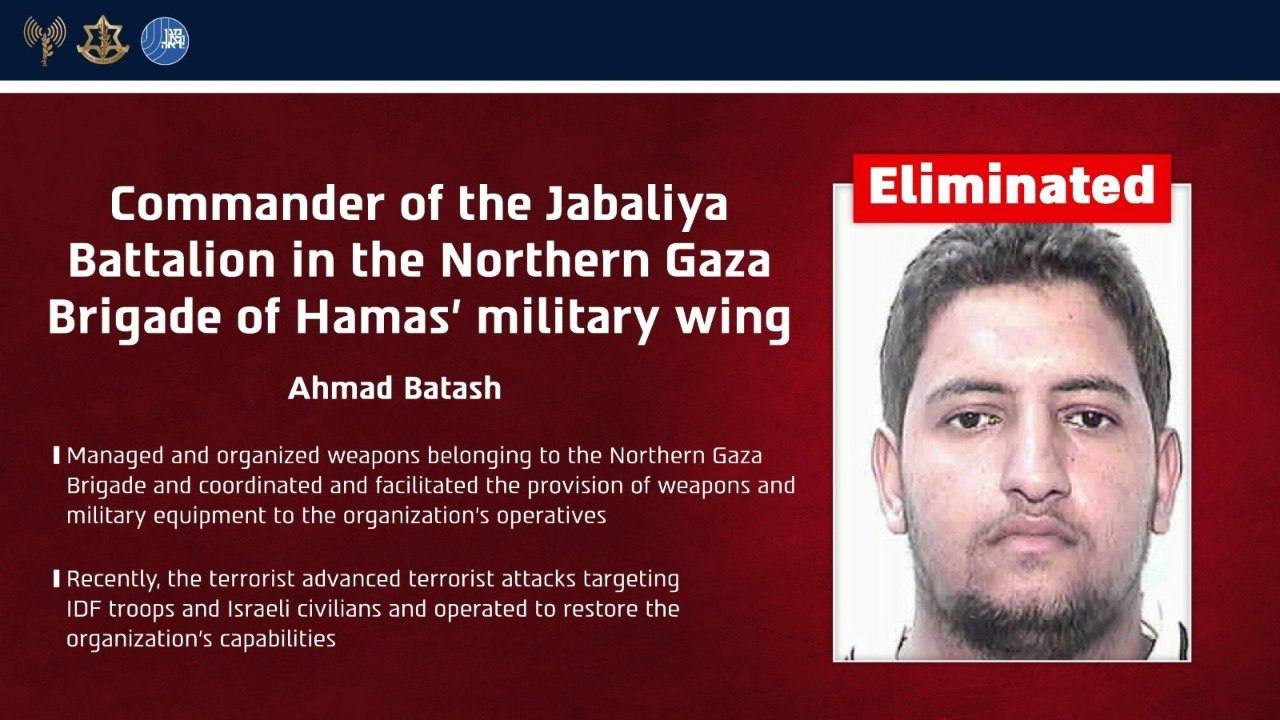
The Israeli military and Shin Bet reported on September 15 the killing of Ahmed al-Batsh, identified as the commander of the Jabalia Battalion in Hamas’s Northern Gaza Brigade [2]. According to the IDF, al-Batsh had been involved in coordinating and managing the fighting capabilities of the Northern Gaza Brigade and had promoted the supply of weapons and military equipment to Hamas terrorists. The strike was framed in standard Israeli security terms: elimination of an immediate threat, disruption of command infrastructure. That framing is not wrong. But it is incomplete.
The same night, local reports from Gaza confirmed that Nail Abu Abid – also known as Abu Atiya – the commander of Hamas’s Rafah Brigade, had been eliminated in a separate Israeli operation in southern Gaza [3]. According to reporting from the region, Abu Abid had been appointed to the position after the killing of his predecessor, Mohammed Shabana, and had previously served as deputy Rafah Brigade commander and commander of the Tel al-Sultan and Yabna battalions. He was, by any measure, a significant figure in Hamas’s southern command structure.
Two brigade-level commanders in under twenty-four hours. By any conventional military logic, this should have created confusion, a pause, some visible disruption in Hamas’s public posture. Instead, within hours, the Al-Qassam Brigades’ media apparatus had produced martyrdom tributes for both men. The Shehab News Agency – a Palestinian outlet that functions as a de facto Hamas communications channel – published a formal martyrdom announcement for Abu Abid with full honorifics and his nom de guerre [4]. The pattern across this period has been consistent: the faster Israel moves, the faster the martyrdom machine responds.
This is not improvisation. It reflects a doctrine that Hamas has been developing and refining since at least the Second Intifada, and which has accelerated dramatically since October 7, 2023. The organization has internalized a lesson that many insurgent movements have learned the hard way – that the death of a leader, handled correctly, can generate more recruits than the leader ever commanded. The Al-Qassam Brigades’ commemoration of Huthaifa Samir Al-Khaloot, identified as the first spokesperson for the Brigades, on the first anniversary of his death in late September, illustrated the longer-term dimension of this approach [5]. Martyrs are not forgotten after the news cycle moves on. They are maintained as living doctrine, referenced in subsequent operations, invoked in calls to arms.
That call to arms dimension has been expanding geographically. Around September 20, according to reporting across this period, the Al-Qassam Brigades issued a direct appeal to fighters in Judea and Samaria (West Bank), urging continued resistance with the Arabic slogan ‘Ya Nabda al-Dhafah, la tihda’ – roughly, ‘O pulse of the West Bank, do not cease’ [6]. The significance here is not the slogan itself but the deliberate framing of Gaza’s fight as a pan-Palestinian struggle, with the Al-Qassam Brigades positioning themselves as the vanguard of a unified resistance movement rather than a territorially confined organization. The commemoration of Abu Ubayda – Hamas’s longtime military spokesman, killed in an Israeli strike – in Jenin during this same period reinforced that cross-territorial messaging [7]. A figure killed in Gaza was being mourned and celebrated in the northern West Bank. The geography of Hamas’s ideological reach is not coterminous with its military geography.
The helicopter activity reported east of Khan Yunis on September 16 – flagged by multiple local sources, including reports of artillery fire in the same area – fits into this operational backdrop [8][9][10]. Israeli helicopter operations in the Khan Yunis area have been a recurring feature of this conflict period, reflecting continued pressure on Hamas’s southern command infrastructure following the degradation of the Rafah Brigade leadership. Whether the September 16 activity was directly connected to the killing of Abu Abid the previous evening is not confirmed in available reporting, but the sequence is consistent with Israeli follow-on operations targeting secondary leadership and logistics networks after a high-value strike.
What makes the Israeli targeting campaign strategically complicated – and what the martyrdom-machine analysis illuminates – is that the kill-list approach carries a structural problem that Israeli planners are aware of but have not resolved. Hamas anticipated mass leadership attrition. The organization has operated under Israeli targeting pressure for two decades and has built succession structures, pre-positioned replacements, and – critically – a propaganda infrastructure designed to exploit each killing. The IDF’s own reporting on al-Batsh noted that he had been ‘involved in coordinating and promoting the supply of fighting means and military equipment’ – language that describes a logistics and command function that will be filled by someone else, possibly within days [2]. The Rafah Brigade had already replaced one commander before Abu Abid; it will replace Abu Abid.
The ideological dimension is harder to replace, but Hamas is not relying on individuals to carry it. The martyrdom system is designed to be self-sustaining. Each killed commander becomes a permanent fixture in the organization’s symbolic universe – a name to invoke, a face for posters, a story for recruitment videos. The commemoration of Al-Khaloot a full year after his death demonstrates that the shelf life of a Hamas martyr is not measured in news cycles [5]. It is measured in generations.
There is a harder question lurking here, and I do not have a clean answer to it. The Israeli targeting campaign has demonstrably degraded Hamas’s operational capacity in specific areas – the elimination of battalion and brigade commanders disrupts planning, interrupts supply chains, forces reorganization. Those are real effects. The question is whether they are durable effects, or whether Hamas’s regenerative capacity – in both personnel and ideology – means that the organization emerges from each round of attrition with its core functions intact and its recruitment narrative strengthened. The evidence from this documented period leans toward the latter, but the conflict is not over and the full operational picture is not visible from open sources.
What is visible is this: Hamas has developed, and is actively deploying, a martyrdom doctrine that treats leadership losses as inputs to a propaganda system rather than as organizational wounds [1]. The Al-Qassam Brigades’ messaging operation across September 2026 – the commemorations, the cross-territorial calls to arms, the rapid eulogies for killed commanders – reflects not grief but deliberate institutional behavior. Israel’s targeting campaign is real, consequential, and militarily justified on its own terms. But it is also, in a way that Israeli planners have not publicly resolved, providing the raw material for the very narrative it is trying to suppress.
New Connect the Dots pieces land two to three times a day. Get the ones that matter in one morning briefing.
Sources
- [1] Hamas Turns Targeted Killings Into Recruitment Fuel: The Al-Qassam Martyrdom Machine
- [2] Son of Hamas Health Official Killed in Israeli Operation in Jabalia
- [3] Israeli Airstrikes Target Southern Lebanon as Regional Tensions Persist
- [4] Report from وكالة شهاب Critical of Israel and IDF
- [5] Al-Qassam Brigades Commemorate Huthaifa Al-Khalil on First Martyrdom Anniversary
- [6] Hamas Keeps Calling to the West Bank – and the West Bank Is Listening
- [7] Hamas Turns Its Dead Into a Living Doctrine: The Martyrdom Machine Behind Abu Ubayda
- [8] Report from الناشط حمزة المصري Critical of IDF, Israeli Air Force
- [9] Report from الناشط حمزة المصري Critical of IDF, Israeli Air Force
- [10] Report from الإعلام الفتحاوي Critical of IDF and Russian Armed Forces
Bias labels are computed from a 263-channel credibility database. This investigation was researched, written, and published autonomously — no human editor reviewed it before publication. Report an error ›