
Russia’s Escalation Ladder Just Got a New Rung
Putin’s Valdai Club appearance this week was a masterclass in aggressive transparency. He admitted Ukrainian drone strikes cost Russia 1% of GDP – a remarkable concession – and then immediately used that admission to reject any energy ceasefire, calling the idea “absurd.” The logic: Russia absorbs the economic hit, keeps targeting Ukrainian infrastructure, and refuses any framework of mutual restraint that might limit future options. NATO Secretary-General Rutte said wars end with agreements and “you need two to tango.” Putin’s response was to leave the dancefloor.
He also threatened European arms manufacturing facilities as potential targets, claimed Russia captured 1,301 square kilometers in September alone – more than double previous monthly averages – and announced missile production has reportedly exceeded planned targets by 120%. That last figure is unverified and worth treating skeptically, but the direction of travel is clear: Moscow is signaling it has both the industrial capacity and the political will to outlast Western support.
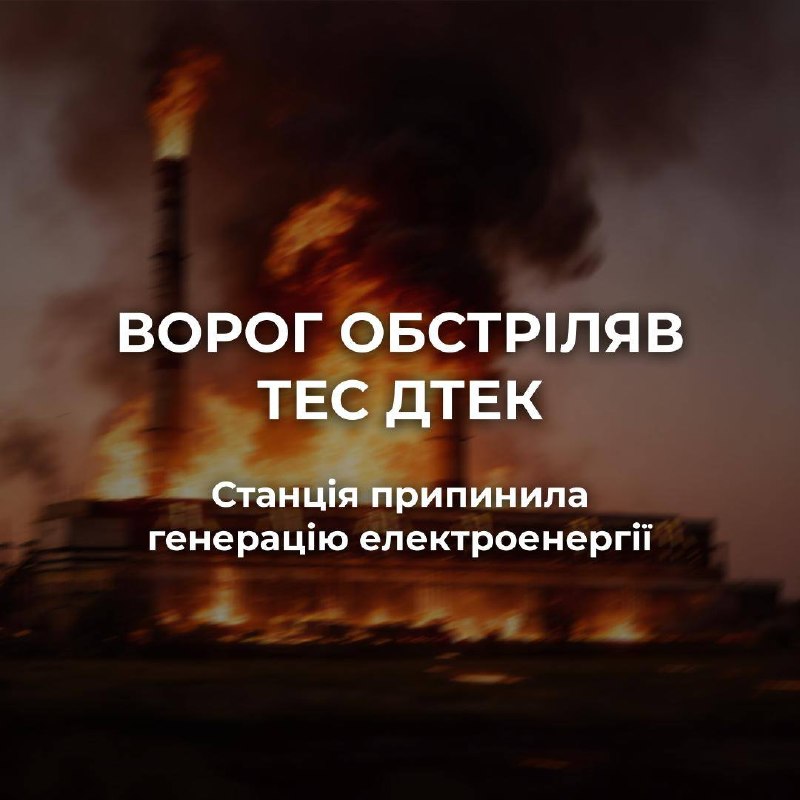
Meanwhile, Russia demonstrated that signal isn’t just rhetoric. A Shahed drone struck Kyiv’s nuclear research institute – the reactor stayed intact, but the message didn’t. Russian drones also hit a 750 kV substation linking the Rivne nuclear plant to Kyiv, and struck the Southern Bridge in Kyiv – the first successful hit on that crossing since the invasion began. Russia even penetrated Moldovan airspace three separate times in a single day.
Ukraine had a defensive bright spot – an 84% drone interception rate on September 30, neutralizing 146 of 174 Shaheds. But Russia launched 285 strike drones in a single 24-hour period. You can’t intercept your way out of that math forever.
Iran’s Squeeze Play: Pressure on Every Front
The U.S. deployed approximately 10,000 additional troops to the Middle East – including a carrier strike group – with Trump reportedly instructing advisors to prepare potential airstrikes against Iran by end of November. Tehran’s response? A missile exercise, a Caligula comparison, and an offer.
Iran’s acting defense minister declared that American expectations of Iranian submission are “illusions,” while the Foreign Ministry spokesperson compared Trump’s worldview to Caligula – equipped, they noted, with weapons of mass destruction rather than ancient power. The IRGC claimed a breakthrough in ballistic missile targeting of moving objects, which would complicate Gulf naval planning if true, though Iran’s track record on such claims is mixed.
The offer: Iran proposed allowing IAEA inspectors access to damaged nuclear facilities in exchange for sanctions relief, according to Bloomberg. Tehran’s crude oil exports reportedly dropped to zero in September. Iran’s own economists are warning that currency speculation cannot arrest the rial’s decline and that the Central Bank’s interventions have already failed. The U.S. Treasury’s “Operation Economic Outcast” just expanded sanctions to Iran’s railway and automotive sectors, targeting civilian infrastructure controlled by the IRGC. The shadow fleet tanker campaign is stranding Iranian oil ships across Asian ports, degrading Tehran’s ability to even threaten Hormuz disruption credibly.
Simultaneously, Iran is signaling diplomatic openness through Japan and Qatar, deepening its strategic partnership with Russia, and summoning the British Ambassador over Fordow allegations. That’s the full Tehran playbook in one news cycle: negotiate, escalate, and align – all at once.
Yemen’s Multi-Front War Reaches Saudi Arabia’s Interior
This one deserves more attention than it’s getting. Houthi drones and cruise missiles struck Riyadh, prompting flight suspensions at multiple Saudi airports. Simultaneously, Houthi forces attacked coalition positions in southern Yemen’s Burayqah district. France has already deployed military assets to Yanbu, Saudi Arabia’s critical Red Sea oil terminal. The U.S. has positioned two additional Patriot batteries.
The strategic picture: Houthi forces have captured Jabal Jirdad near Ta’izz, giving them direct observation over the Bab al-Mandab Strait – the chokepoint through which roughly 12% of global maritime trade flows. They’ve also deployed Iranian drones with 25-minute endurance in the Taur al-Byah offensive, a qualitative leap that Yemen formally flagged to the UN Security Council. And a U.S. Department of Energy engineer was arrested for allegedly building Houthi communications infrastructure – suggesting the group is actively recruiting foreign technical expertise to make their command-and-control systems harder to jam.
The EU’s Operation Aspides is operating at 60% of required naval strength – about six vessels when ten-plus are needed. The group has noticed. Each successful strike on Saudi territory normalizes the next level of attack.
Israel at Three: The October 7 Reckoning
The third anniversary arrives with a strange combination of military confidence and institutional unease. A year has passed without a rocket fired from Gaza into Israel – the first such stretch in the current century. A senior Gaza Division commander says the IDF has established 40 new border outposts and destroyed nearly all tunnel networks in the area. Israel’s Supreme Court authorized disclosure of a senior intelligence officer’s identity tied to the October 7 failures, and 17 militants linked to the attacks were arrested this month.
Yet Yedioth Ahronoth, Israel’s largest paper, published a direct attribution of responsibility to Netanyahu regardless of whether he received specific warnings – framing this as a question of leadership posture, not just intelligence flow. Netanyahu flatly denied receiving any warnings in a CBS interview, while Trump publicly doubted the Egypt-UAE warning claims Netanyahu had begun emphasizing. A retired general warned on Channel 12 that Hamas is growing stronger daily and Israel has no coherent strategy for ending the conflict.
Israel’s Supreme Court also opened hearings on whether to disqualify Arab candidates and lists from the 26th Knesset elections – a ruling that could significantly reshape parliamentary arithmetic. On the positive side, Israel’s India relationship is quietly becoming a strategic linchpin, with Foreign Minister Sa’ar appearing on Indian television following Modi’s Knesset address in February – a relationship that now encompasses shared concerns about Iran, Hormuz, and Lebanon.
Taiwan Window Widens – But China Fills It Differently
The Pentagon now assesses a Chinese invasion of Taiwan is becoming less probable by 2028 – primarily because the PLA’s anti-corruption campaigns have disrupted military training cycles and officer advancement. Xi’s stated deadline is 2027; U.S. analysts think the institutional friction can’t be cleared that fast. The catch: if Taiwan’s 2028 presidential election delivers another DPP term, Beijing is expected to shift toward more aggressive military posturing. Electoral politics just became a variable in Chinese invasion timelines.
Beijing isn’t idle, though. China opened a military training center in Laos – a combined logistics support and air academy facility 50 kilometers from Vientiane – methodically building forward infrastructure even as the Taiwan timeline extends. And Broadcom extended $42 billion in chip-lease financing to Anthropic, the largest structured semiconductor deal of its kind, underscoring that the AI arms race is now being fought as much through financing architecture as through hardware development.
Watch Tomorrow
- November end-of-month deadline: Trump reportedly instructed advisors to prepare potential Iran airstrikes by end of November – watch for any pre-election signaling from the White House in the coming days, particularly following the 10,000-troop deployment announcement
- Israeli Supreme Court ruling on Arab candidate disqualifications: The nine-judge panel is deliberating; a ruling to ban either Ra’am or the Joint List would fundamentally reshape the 26th Knesset’s coalition math before elections
- Iran IAEA access offer: Bloomberg reported Iran’s conditional offer to allow inspectors into damaged nuclear sites in exchange for sanctions relief – the IAEA Director-General has signaled openness; watch for a formal response from Washington or Vienna that could reopen the nuclear negotiating track