
Ukraine’s Darkest Winter Yet
The lights are going out again. Ukraine’s grid operator Ukrenergy resumed rolling blackouts across multiple regions this morning – outages running from 6am to midnight, hitting up to two consumer groups at once. Kyiv’s metro was knocked offline by Russian shelling, restored within hours, then the blackouts began anyway. That’s the rhythm now: fix one thing, lose another.
The strategic picture is darker still. Ukrainian intelligence reports eight Tu-95MS bombers staged at Ukrainianka airfield, each armed with 28 Kh-101 cruise missiles. The frigate Admiral Makarov sits in Novorossiysk with Kalibr missiles ready. Zelenskyy warned last week that intercepted Russian documents show plans to strike 60 critical infrastructure sites with up to 1,000 missiles and drones. Russia isn’t hiding what it’s doing – it’s announcing it.
Into this walked UK Foreign Secretary Ed Miliband, who visited Pervomaysk alongside Zelenskyy after a Russian missile strike killed 22 people there – including five children – and wounded 54 others. More than 100 residential buildings damaged. Miliband’s message to Putin: “You once said you’d win on the battlefield. Now you’re trying to win by terrorizing civilians. I don’t believe you’ll succeed.” Britain backed it with $72 million in new energy infrastructure aid.
Meanwhile, a Rating Group poll shows 56% of Ukrainians would now accept territorial concessions for credible US and European security guarantees – a dramatic shift from August, when 60% rejected surrendering Donbas under any terms. War fatigue is real. The question is whether Western capitals can offer guarantees robust enough to make the trade-off worth it.

The Hormuz Squeeze
The IRGC has stopped threatening and started shooting. An LNG tanker – the NV Sunshine, operated by Dutch firm Natoil – was struck in the Strait of Hormuz, causing a fire in its engine and propulsion systems. The IRGC claimed the ship was attempting an “illegal southern route.” One assessment warns it’s now “highly unlikely any ship will slip through the strait” without Iranian authorization.
Washington’s response is a maximum-pressure sandwich. The US Treasury has sanctioned over 300 vessels in Iran’s shadow fleet – a dramatic expansion that targets not just ships but the banking relationships, insurance arrangements, and trade finance that makes smuggling viable. Separately, Treasury plans to seize $1 billion in Iranian cryptocurrency holdings, including $130 million in Tether tokens frozen from accounts linked to Iran’s Central Bank on the Tron blockchain. Tehran thought blockchain offered a safe harbor. It didn’t.
And now Treasury is in active negotiations with Pakistan and Turkey to seal Iran’s land borders entirely. Pakistan needs US security assistance; Turkey needs economic stability. Washington is testing whether financial pressure can persuade both to choke off Iran’s remaining overland lifelines.
The Pentagon, meanwhile, has presented Trump with a three-day strike plan targeting Iranian drone programs, energy infrastructure, and IRGC command centers. No decision announced. But the architecture is built.
Inside Iran, the collapse is visible in pharmacies and paychecks. Medicine costs have tripled in six months. Insulin is hard to find. Cancer patients are taking billion-rial loans for treatment, then losing government subsidies afterward. Iran’s agricultural exports have collapsed 60% year-on-year. And a Guardian Council member publicly challenged the regime’s core economic promise – that oil belongs to the people. Even the loyalists are losing faith in the math.
Israeli Politics: The Coalition Cracks
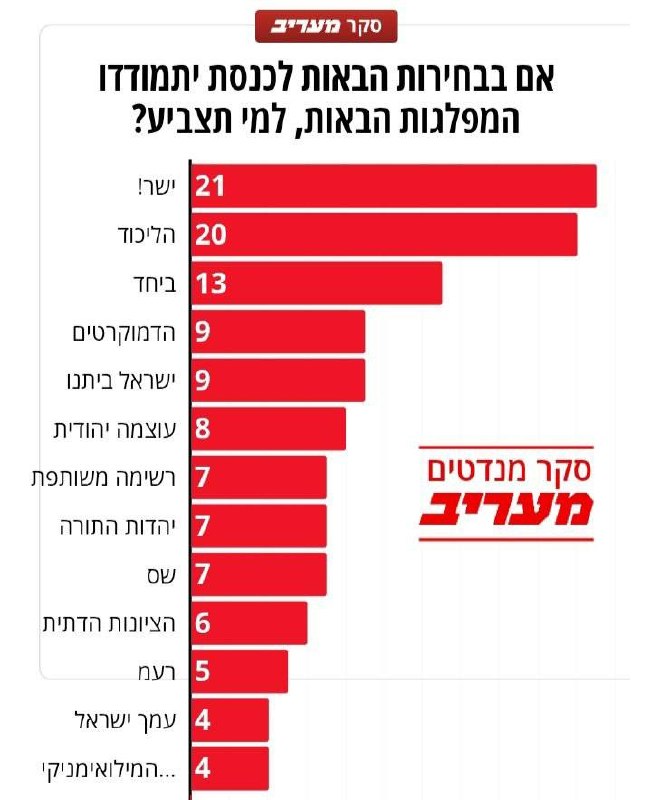
With elections three weeks away, Israel’s political landscape is fracturing in unusual ways. The latest Maariv poll shows Likud holding 20 seats but the blocs tied at 52-52 – a configuration that leaves neither side with a governing majority. Then Likud activists did something remarkable: they publicly accused Netanyahu of not understanding “basic processes” in Israeli governance, claimed he can’t form a majority without Arab parties, and demanded an investigation into the prime minister. Not the opposition – his own party.
That’s the backdrop for the Avi Gil allegations, which are significantly more explosive. Netanyahu’s former military secretary – a retired major general with direct access to the Prime Minister’s Office – alleges that Netanyahu repeatedly rejected Shin Bet recommendations to act against Hamas leaders before October 7, that staff in his office demanded timestamp alterations on official protocols, and that hostages could have been recovered alive if political considerations hadn’t intervened. Likud called it “blood libel.” Netanyahu has not responded to the specific allegations.
A former Shin Bet official named Ilan Shavit corroborated a version of the pre-October 7 picture: “Every time we came and said we are ready, he would answer us: maintain readiness.” The two narratives – officials conspired to exclude Netanyahu vs. Netanyahu rejected security recommendations – cannot both be true. That contradiction is now the center of Israeli political life.
Saudi Arabia’s Burning Infrastructure
The strikes on Saudi energy infrastructure are no longer isolated incidents – they’re a campaign. Satellite imagery shows fires at the Abqaiq oil processing complex burning for more than 24 hours. Damage has been documented at Aramco’s Khurais facilities, the Yanbu refinery, and the Ain Dar oil field – part of Ghawar, one of the world’s most significant production areas. Now Petro Rabigh shows tank damage in satellite imagery.
Saudi Arabia’s air campaign response has surpassed 1,800 total strikes, with a single 24-hour period seeing 59 airstrikes. F-15s and Eurofighter Typhoons are flying constant rotations. Reuters reports Turkey is now providing air defense systems, drone operators, and intelligence to Saudi Arabia on a bilateral basis – the parliamentary ratification that would formalize the arrangement hasn’t happened yet, but the operators are already there.
Brent crude is at $103 a barrel, down from $108 earlier this month. And Europe enters winter with gas reserves at a 13-year low – just above 70% capacity, roughly 14 billion cubic meters short of normal. That gap equals the annual consumption of 12 million households. Brussels has activated emergency protocols. The EU’s ban on long-term Russian LNG contracts kicks in January, cutting another 7 billion cubic meters. The math does not improve.
Watch Tomorrow
- October 14 (Tuesday): Hamas has announced that its electoral alliance with Palestinian Islamic Jihad and the Reform Current registers candidates across the West Bank and Gaza Tuesday – the final day of the candidacy period. Watch whether the Palestinian Authority attempts to block registration or accepts it, which will determine whether Palestinian elections proceed or collapse again.
- Kushner-Wittkoff Moscow visit: The Kremlin confirmed Putin is ready to meet Trump’s envoys but cannot confirm October timing. If the visit materializes before month-end, it signals a genuine diplomatic channel opening on Ukraine; if it slips, watch for Russian infrastructure strikes to intensify.
- Israeli election (October 29): The 52-52 polling deadlock combined with Likud’s public attacks on Netanyahu means the threshold battle – parties need 3.25% to enter the Knesset – could shift the coalition math by 2-3 seats. Small right-wing parties on the margin become the ones to watch.