
Ukraine Fights Back With AI and Ballistic Missiles as Russia Targets Everything
The war entered a new phase this weekend. On one side: Russia struck a medical warehouse in Sumy, hit data centers, targeted bridges, and killed a 14-year-old boy in Kyiv’s Pechersk district with a Shahed drone. An Israeli citizen also died in that same strike. On the other: Zelenskyy isn’t absorbing it quietly.
He’s announced intensified refinery strikes, confirmed Ukraine’s domestically built FP-9 ballistic missile goes operational this autumn, and declared that Russia’s targeting of bridges, data centers, and mobile networks will be met in kind. “Do they really think we won’t respond?” he asked. That’s no longer a rhetorical question.
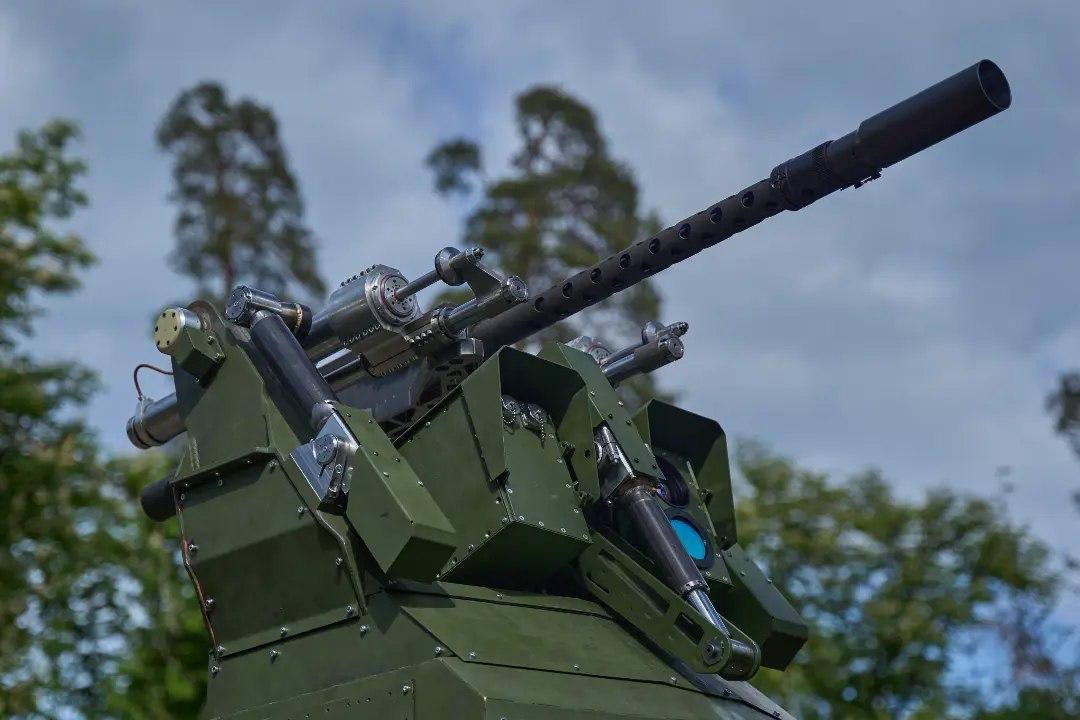
Ukraine also deployed 12 AI-controlled .50-caliber turrets across Kyiv to intercept Shahed drones – eight more are coming to Kyiv Oblast. They detect, track, and engage without human input. Residents near them are being told to stay away from windows during air raid alerts. That’s not a comfort measure. That’s what living next to an automated weapon system in a city of three million looks like.
Meanwhile, Finland’s President Stubb delivered an assessment Western governments don’t want to hear: Russia entered this war incapable of modern warfare, but is leaving it far more capable. The grinding attrition has functioned as a modernization accelerator – combined arms, drone integration, electronic warfare, all tested at scale. The man with the longest NATO border with Russia is telling us that whoever wins this war, Europe faces a more dangerous Russian military on the other side of it.
Russia’s own budget tells another story about the costs of that modernization. Moscow’s 2027-2029 proposal cuts cancer treatment funding by 92% – from 44.9 billion rubles to 3.9 billion – while allocating 60 billion annually for children’s military training and ideology programs. The regime is choosing guns, tanks, and patriotic education over oncology wards. For an aging population with rising cancer rates, that’s not a budget line. It’s a death sentence denominated in rubles.
Iran’s Crumbling Economy Meets a Hardening Nuclear Posture
The gap between what Iranians earn and what they need to survive is now 18 million tomans per month. Monthly wages average 25 million tomans; basic household expenses run 43 million. Annual inflation hit 68.4% in September, with year-on-year price rises at 84%. Iran now ranks second globally in food inflation, behind only Venezuela. Digital gold purchases on Iranian e-commerce platforms have surged 1,200% as citizens convert whatever savings they have into something that holds value.
Into this economic collapse, Iran’s Security Council chief admitted in a closed meeting that the country is in “one of the most difficult periods in its history.” When your security apparatus stops pretending, the crisis is real. The Oil Minister resigned – officially for “personal reasons,” which is Tehran’s standard language for politically motivated removals. His departure removes a voice that believed Iran could engineer its way around sanctions through domestic refinery expansion. Someone more aligned with the hardline posture is replacing him.
And yet, even as the economy disintegrates, Iran’s nuclear posture is hardening. Foreign Ministry spokesman Qaemiyeh explicitly decoupled the nuclear file from broader negotiations, stating the atomic program “was not included in the Iranian proposal” and there would be “no trade-off between IAEA inspections and sanctions relief.” NPT withdrawal is being “seriously discussed” in political circles, according to the Foreign Ministry itself. Iran is simultaneously announcing three Soleimani satellites ready for a February 2027 launch – a surveillance constellation designed to coordinate proxy operations across Iraq, Syria, Lebanon, and Yemen – and expanding missile range, while publicly declaring readiness for both war and diplomacy.
Iran International identified six decision-makers divided on US negotiations: Pezeshkian, Qalibaf, and Araghchi lean toward agreement; Rezaei, Abdollahian, and Vahidi favor escalation. That six-person split is running Iran’s most consequential decisions right now.
The American Bomber Withdrawal Nobody Talked About Openly
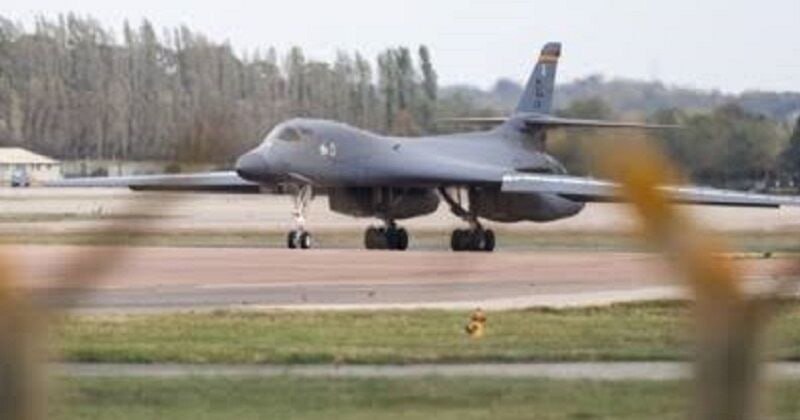
All 12 B-1B Lancer bombers departed RAF Fairford in the UK over October 4, following new intelligence assessments of Iranian ballistic missile threats to the base. The Pentagon confirmed it after the fact – “for operational security reasons, we were unable to confirm the movement of aircraft in real time.” At least 10 departed in one window, with tankers accompanying them across the Atlantic.
This is not a routine rotation. It leaves zero US strategic bombers permanently based in Europe – a posture shift that increases response times for any Middle East contingency and reduces the visible deterrent effect of American airpower in the region. UK Prime Minister Burnham linked the withdrawal to Iranian activity without providing specifics. One report described the speed and scale as “more appropriate to a state of active warfare.”
The timing is striking: the US is simultaneously reviewing an Iranian seven-day ceasefire proposal transmitted through intermediaries, and approximately 3,000 US troops are already in Israel operating air-defense systems. Russian envoy Ulyanov publicly stated that from Moscow’s perspective, “real negotiations have not yet started.” So the Americans say talks are happening, the Russians say they aren’t, and in the meantime the bombers came home.
Yemen Tightens the Noose Around Taiz as Israel Votes
The Yemen conflict has crossed into capital-targeting territory on both sides. The Houthis struck Aramco facilities in Riyadh and hit Saudi infrastructure; Saudi Arabia responded with roughly 50 strikes in 12 hours, including some on Sana’a. King Khalid International Airport suspended flights three separate times. Brent crude rose over 4% on the coordinated attack news.
On the ground, the picture for Saudi-backed forces is deteriorating. Houthi forces seized the Al-Safiya Junction, cutting a critical supply route into Taiz, and are now advancing toward Al-Ashbah – positioning to fully encircle a city of 600,000. 145,000 people have been displaced as the offensive accelerates. Four Iranian drone and missile specialists were killed during operations in Taiz province over 72 hours – a reminder that Tehran isn’t just supplying weapons, it’s providing operational expertise.
In Israel, Netanyahu convened his Cabinet on election eve for a session covering the New York debrief, Sa’ar’s international legitimacy presentation, and operational briefings from Central Command. The Central Elections Committee accused him of using military speeches for campaign purposes, which Netanyahu predictably disputes. Defense Minister Katz meanwhile attacked Yair Golan for willingness to include Arab parties in a potential coalition – forcing Lieberman to publicly clarify his red lines within hours. The coalition math gets resolved tonight.
Watch Tomorrow
- Israeli election results: If Netanyahu’s coalition falls short of 61 seats, coalition negotiations begin immediately and will reshape every security decision from Gaza to Lebanon – watch the seat count on the right bloc.
- US response to Iran’s seven-day Hormuz proposal: The American review was still in progress as of October 4; Tehran’s Foreign Ministry said it is awaiting a formal response through intermediaries, and has signaled it has “alternative scenarios” ready if talks collapse.
- Tampa military talks, October 20-22: US Central Command is convening Lebanese and Israeli military delegations – the first structured engagement since the Rome talks in August – but Israeli strikes on southern Lebanon are continuing in the meantime, setting up a collision between diplomacy and operational reality.