
Russia’s Digital Decapitation Play Kills Two Children in Kyiv
Russia struck Kyiv’s data centers twice in the early hours of September 27 – killing three people, including two children. Moscow called it a “digital detox.” Zelenskyy called it what it is: terrorism. The targets weren’t military bunkers – they were Vodafone, Kyivstar, and Omega Telecom facilities that keep Ukraine’s military communications and civilian internet running simultaneously. Russia is now systematically working through Ukraine’s telecommunications backbone, hitting data centers, logistics nodes, and drone storage warehouses in a single coordinated campaign.
The numbers are staggering: in one week alone, Ukraine absorbed over 2,200 drone strikes, 1,650 aerial bombs, and 38 missiles. 147 of 170 drones were intercepted overnight – an 86% interception rate that sounds impressive until you do the math on how many got through.
Meanwhile, on the front lines, Zelenskyy announced Operation Vivaldi is making gains on the Lymanskyi front in Donetsk – Ukrainian forces reporting 10,660 Russian soldiers neutralized in a single week. Zelenskyy’s broader assessment is grim but clear: Russia is locked into war, manufacturing pretexts to avoid talks, and American officials now agree. The Kremlin, for its part, is warning Finland to back off pushing Elon Musk to expand Starlink coverage for deep strikes – and nervously touting its homegrown “Rassvet” satellite alternative, which Peskov says “should soon work more effectively.” That hedging language doesn’t project confidence.
Iran’s Squeeze Gets Tighter on Every Front
Trump rejected Iran’s Hormuz reopening proposal this week – oil ticked up 1% on the news – and Treasury Secretary Bessent warned Iran’s economy will have “nothing left within two weeks.” The IRGC responded by claiming a second captured American underwater drone, this time a Remus 600 autonomous vehicle, seized through what they describe as “electronic warfare capabilities.” The U.S. Navy hasn’t confirmed losing either drone. Iran also struck a vessel in the strait and British intelligence has formally attributed the attacks to the IRGC – not proxies, the IRGC directly.
But here’s the thing: Energy Secretary Chris Wright says the Strait isn’t actually the problem. Over 20 million barrels passed through last week – more than pre-conflict averages. The real constraint driving record fuel prices is global refining capacity, not Hormuz traffic. That’s a significant reframe that suggests the energy weapon Tehran thinks it holds is blunter than advertised.
The domestic picture is worse. Oman’s flight suspension has strangled Iran’s smartphone imports – over 90% of mobile phones arrived via air cargo through the Dubai-Muscat-Tehran corridor, now closed. Google has restricted Gmail account creation for Iranian users. Iranian nurses earn a monthly salary that doesn’t cover ten days of basic expenses. And Iran’s parliament has capped its own assembly gatherings at 80 lawmakers – a 290-seat legislature that can’t safely convene in full session. That’s not governance. That’s a security state that doesn’t trust its own politicians.
Iran’s Foreign Ministry proposed the Strait deal – reopening within six days in exchange for sanctions relief and Lebanese ceasefire maintenance. Hours later, the military publicly contradicted them. The regime can’t even coordinate its own talking points. Indirect US-Iran talks are expected to resume as early as this week, but Tehran’s Foreign Minister is simultaneously defending 60% uranium enrichment as “peaceful” while demanding sanctions removal as a precondition for talks. That’s not negotiating – that’s stalling while hoping something changes.
Hezbollah at Two Years: Weaker, Louder, More Isolated
Two years since Nasrallah’s death, and Hezbollah’s new chief Naim Qassem has picked a fight – not with Israel, but with the Lebanese government. He’s accused Beirut of surrendering Lebanese sovereignty to American and Israeli interests, called recent power-sharing deals “humiliating,” and demanded the government be overthrown. This is an organization that lost its most capable commanders, its unified communications apparatus, and thousands of fighters – and is now attacking the state it used to operate within rather than alongside.
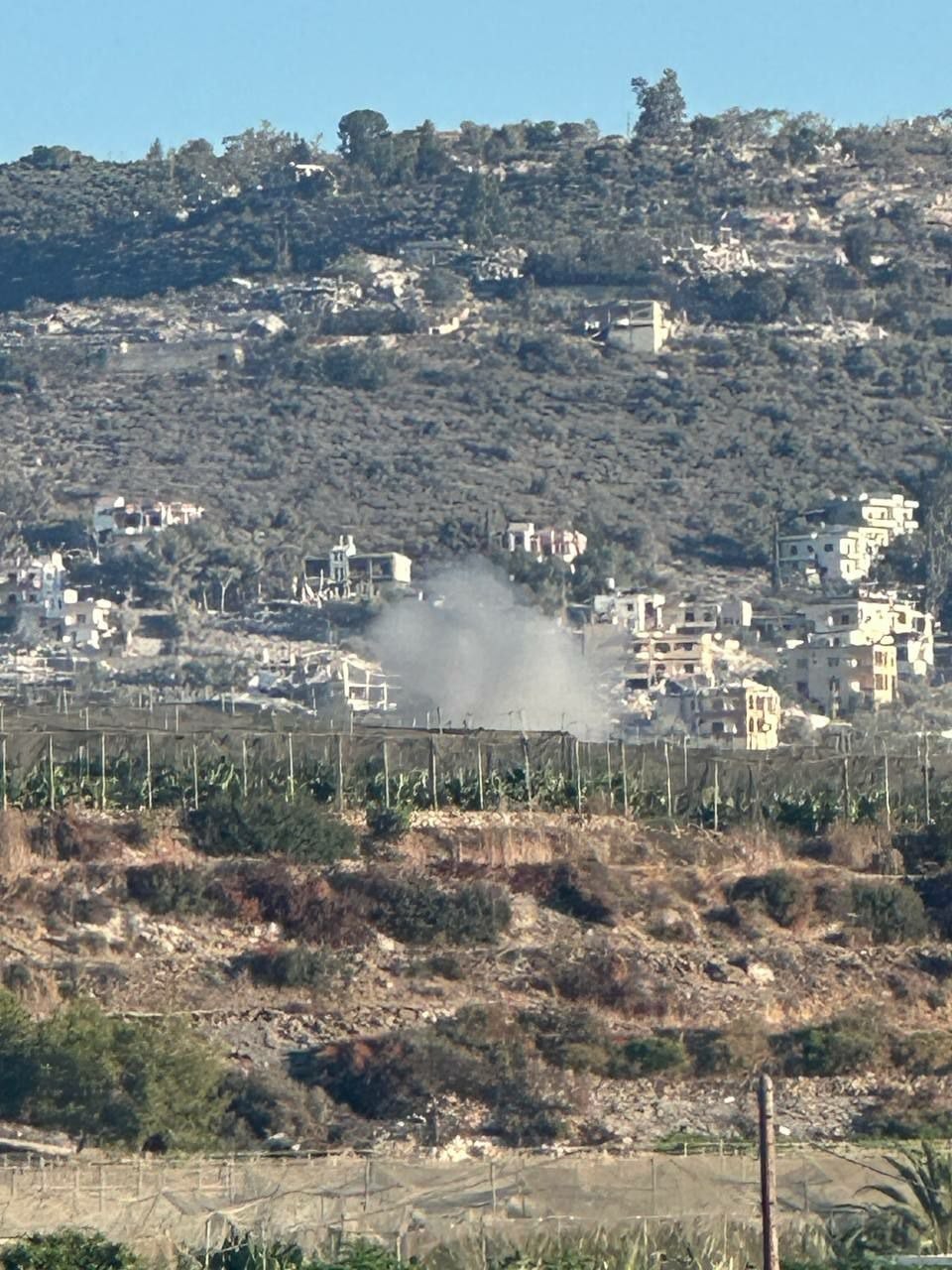
Israeli forces are hitting southern Lebanon in sustained, coordinated waves – at least a dozen villages struck by air and artillery, targeting Hezbollah command infrastructure embedded in civilian areas. The same villages – Wadi Zaqeen, Zoutar, al-Mansouri – appear repeatedly on attack summaries going back three months. Israel is methodically degrading specific nodes.
Netanyahu, meanwhile, made a four-hour unannounced trip to Abu Dhabi to meet Sheikh Mohamed bin Zayed. No statement from either side. The timing – with Iran under maximum pressure and Gulf states recalibrating – suggests serious security coordination. And in a different kind of offensive, Netanyahu has ordered the preparation of a legal file against Erdogan at the ICC – over Hamas funding and Kurdish treatment – a counter-move after Ankara sought an Interpol Red Notice against Netanyahu over the 2010 flotilla. Neither country recognizes ICC jurisdiction, which means this is messaging, not litigation.
On the October 7 accountability front: Eisenkot revealed that Shin Bet warned Netanyahu about a major Hamas escalation one month before the attack and recommended preemptive action. Netanyahu declined. And in Gaza, an Israeli police drone documented the elimination of Sa’eer Skar – the terrorist who kidnapped Noa Argamani on the back of a motorcycle at the Re’im music festival. The Gideon Unit tracked him to Nuseirat. He’s gone.
The Rest of the World Didn’t Stand Still
South Africa: Police have found the tenth woman’s body in Ekurhuleni east of Johannesburg, and are openly investigating a serial killer possibility. On the same day, 17 people were killed in a bar attack in Vredenburg by eight armed men. South Africa’s violence crisis is not receding.
UN General Assembly: 78 countries walked out on Netanyahu’s speech – eight more than last year. Who stayed: the US, UK, Germany, France, Japan, India, Australia, Russia, China, UAE, and Bahrain. Who left: most of the Arab world, with Spain as the only EU defector. Netanyahu opened by daring “moral cowards” to leave. They did.
Israel’s internal politics: Five opposition leaders signed a formal coordination pact to unseat Netanyahu’s government. Meanwhile Ben-Gvir is pushing Gaza resettlement – publicly announcing plans to return to Nisanit and expand Israeli civilian presence throughout northern Gaza “without limits.” That’s a direct challenge to the coalition’s fragile consensus and a test of whether Netanyahu will accommodate his far-right flank or lose their votes. The coalition currently holds 68 seats. The math is tight.
Montenegro: A Russian-Israeli couple was arrested at Tivat airport with €1 million in undeclared currency, GPS trackers with microphones, signal detectors, surveillance cameras, and – notably – a polygraph machine. In 19 suitcases. Headed to Tel Aviv. The investigation is ongoing.
Watch Tomorrow
- Indirect US-Iran talks are expected to resume as early as this week – watch whether Pakistani or Omani intermediaries confirm a meeting venue and whether Tehran arrives with the same hardline preconditions or signals any flexibility on the 60% enrichment question.
- Ben-Gvir’s Gaza resettlement push heads into coalition negotiations: watch whether Netanyahu publicly responds or stays silent, and whether centrist coalition partners like National Unity signal any red lines before the 2027 budget talks crystallize.
- Operation Vivaldi on the Lymanskyi front: Zelenskyy flagged “defined objectives being achieved” – watch for Ukrainian military briefings in the next 48 hours confirming whether territorial consolidation has occurred or whether Russian counterattacks have stalled momentum.